A useful starting point, not a strict rule
At its simplest, contemporary art is art made in our time. But that definition raises an immediate question: whose present are we talking about? A work made recently can revisit an old technique, while an older work can still feel urgent today. The word “contemporary” is useful, but it does not draw a sharp line around one style, material or set of ideas.
In museums, galleries and everyday conversation, the term often points to work shaped by the conditions of relatively recent life. Artists may respond to technology, migration, the environment, identity or the way images circulate. They may also concentrate on quieter questions of color, form, memory or attention. A work does not need to announce a major social issue to count as contemporary art.
Contemporary is not the same as modern
In ordinary speech, “modern” can mean new. In art discussions, however, modern art usually refers to earlier movements and approaches that challenged established conventions of representation and artistic practice. Contemporary art follows and sometimes builds on those experiments, but the two terms are not interchangeable. Their boundaries vary across institutions and regions, so it is more helpful to treat them as guides than as precise dates on a timeline.
The distinction also involves attitude. Many modern artists asked what a painting or sculpture could become if they moved away from familiar rules. Contemporary artists can ask that too, but they may also question where art belongs, who gets to make or encounter it, and how a work changes when it is documented, shared or installed in a new setting. These concerns overlap rather than replacing one another.
Why it can look like almost anything
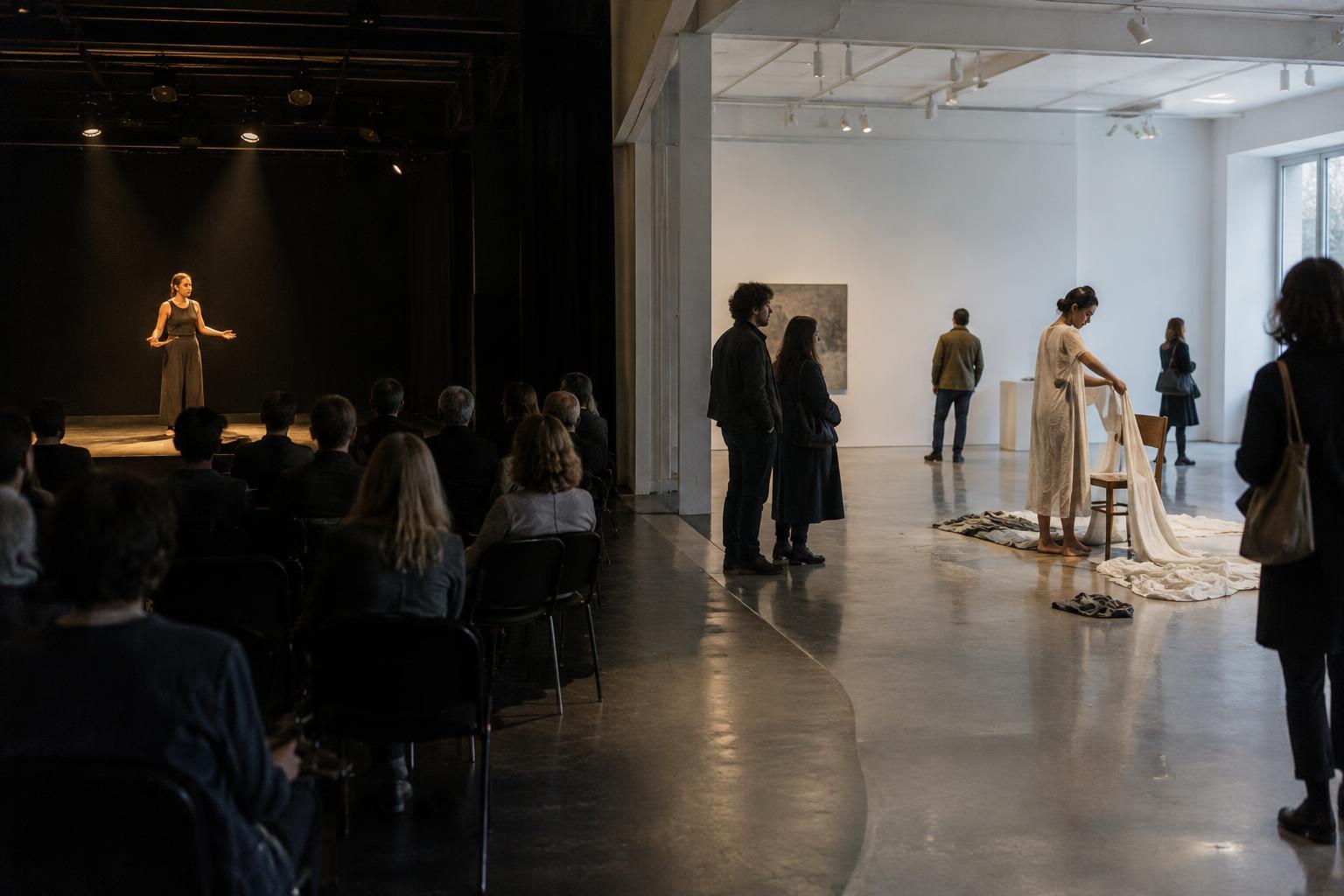
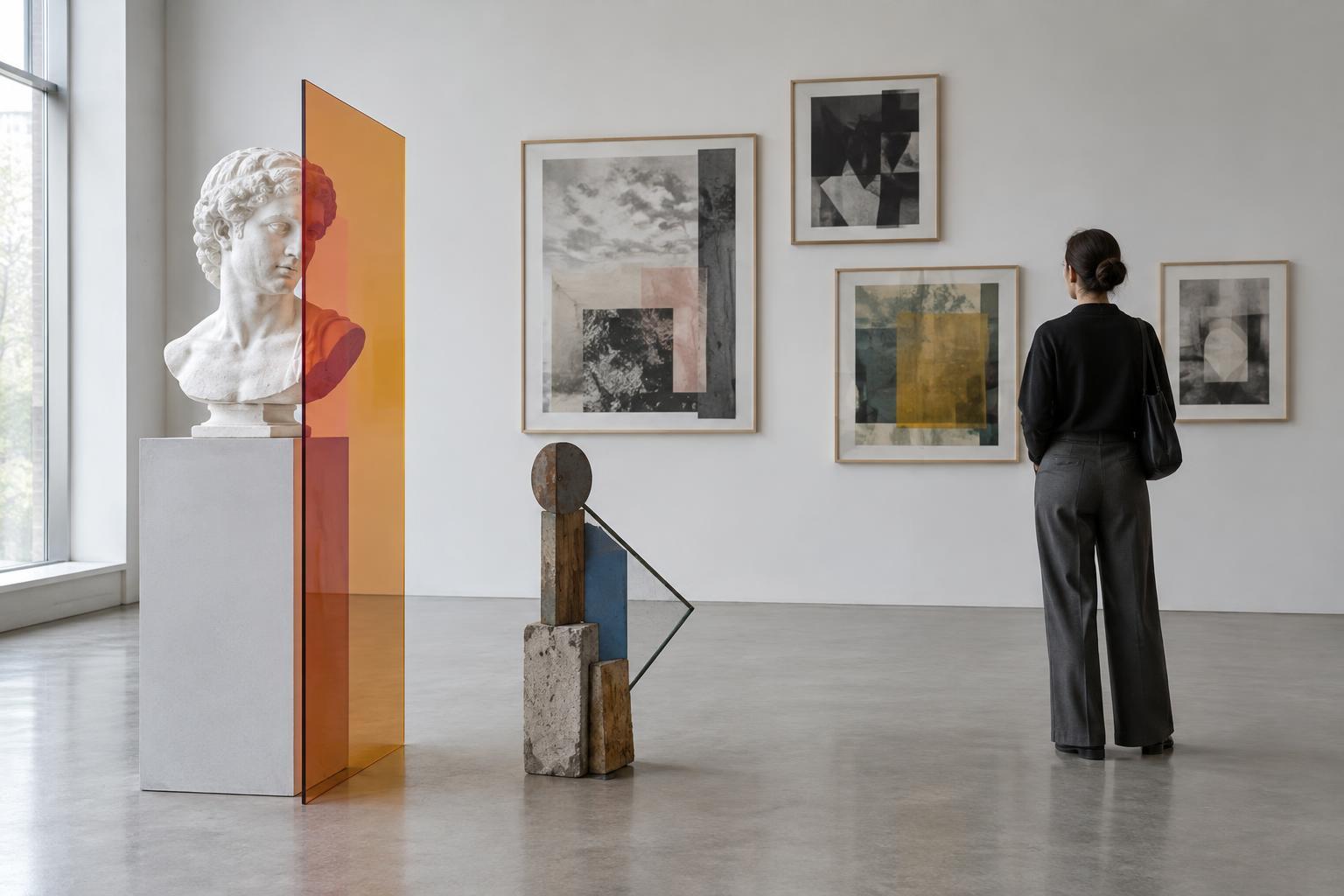
Contemporary art can take the form of painting, photography, video, sound, performance, digital work or an arrangement of everyday objects. An installation might ask you to walk through a space instead of looking at an object from one position. A performance might exist for only a short time, leaving behind documentation or traces. Familiar materials do not automatically make a work simple, and unusual materials do not automatically make it meaningful.
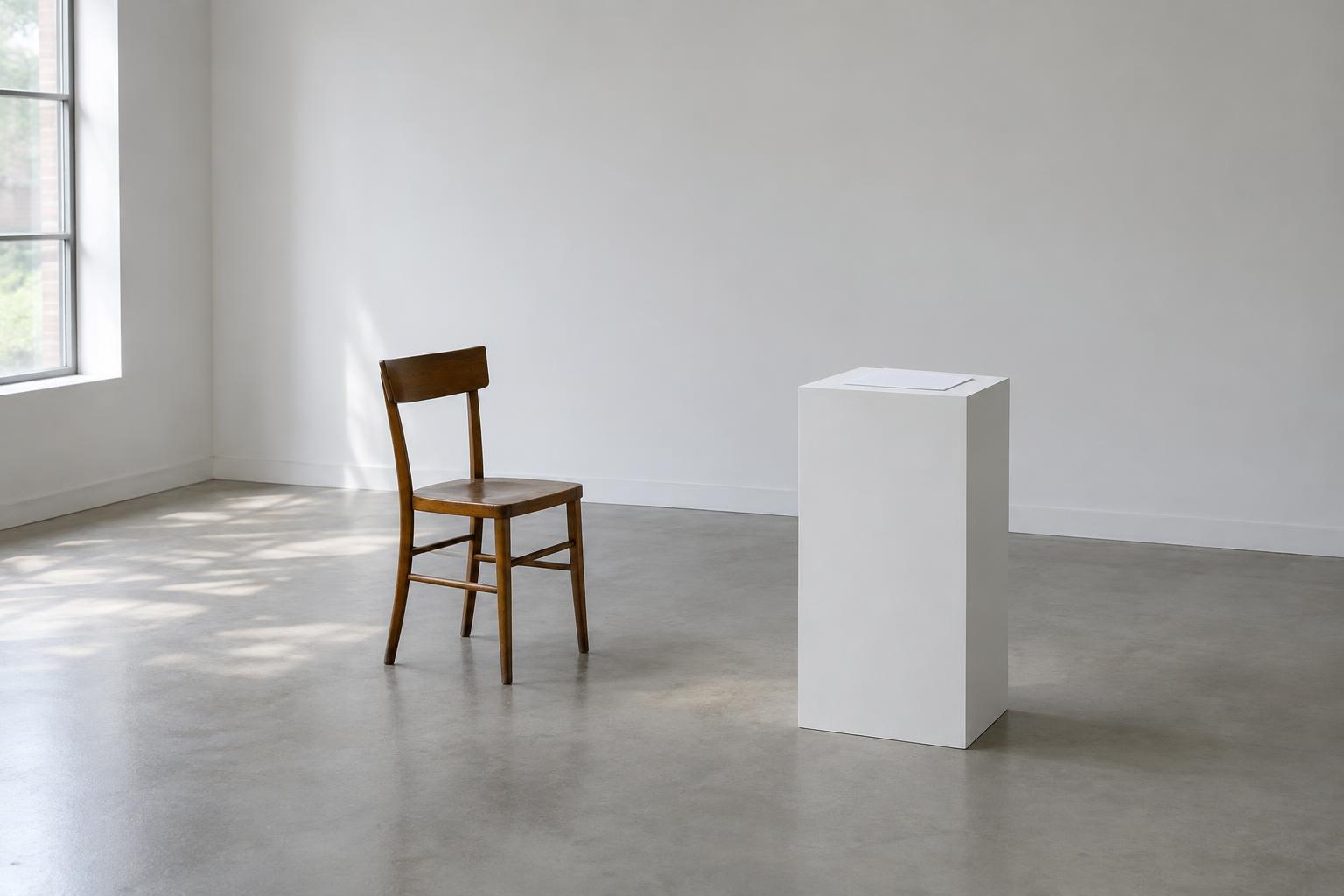
The choice of medium often contributes to the idea. An artist using discarded packaging, for example, might invite attention to consumption, labor or the overlooked qualities of ordinary things. Another artist might use the same material chiefly for its color, texture or flexibility. Rather than assuming that every object hides a single message, consider how its materials, arrangement and setting work together.
Context matters, but it is not a secret code
An artwork does not arrive alone. Its title, location, scale and relationship to other works can affect what you notice. A photograph displayed on a gallery wall may be experienced differently from the same image printed in a public space. A room-sized installation may make your own movement part of the encounter. Learning about an artist’s process or the circumstances behind a work can add meaning, but it need not cancel your first impression.
Exhibition labels can be helpful, especially when a work refers to a specific history or community. They are not an exam answer that you must repeat. You can read a label, look again, and decide which details seem important to you. It is also reasonable to leave with questions. Some works deliberately hold several possibilities open rather than guiding every viewer to one conclusion.
How to begin looking
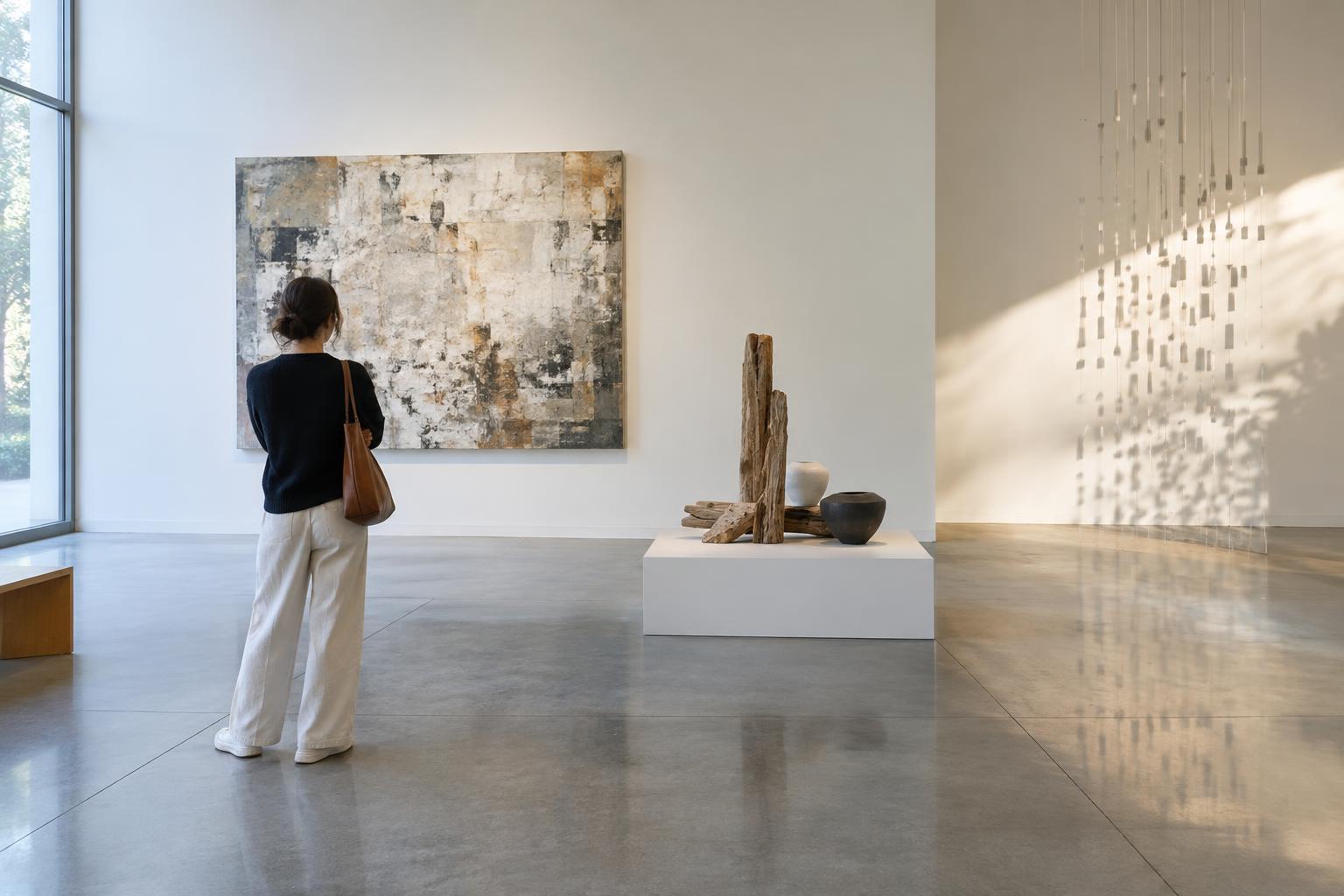
Start with what is actually in front of you. What materials can you identify? How does the work use light, scale, sound or space? Where does it ask you to stand, move or pause? Then consider what choices seem deliberate and what those choices make possible. This approach works whether you are looking at a small drawing, a complex installation or a temporary work in a public place.
Next, ask what you know and what you are assuming. A title or short description may change your reading; your own experiences may shape it too. You do not have to like a work to take it seriously, and you do not have to solve it to have a worthwhile encounter. “Contemporary” names an active, varied field of artistic practice. Curiosity is a better entry point than trying to find one rule that makes every work fit.