Give the project a question, not a verdict
A self-directed art brief is a short working document you write for yourself before making a piece or beginning a series. Unlike a commission, it does not have to promise a finished result. Its job is to make the first decisions visible: what draws your attention, what you want to try and what conditions you will work within. It can be a page of sentences, a set of questions or a few notes beside a sketch.
Begin with a question that invites action rather than a statement that dictates meaning. “How can a soft material alter the way someone moves through a room?” gives you something to test. “Make a work about comfort” may be too broad to guide a choice of material, scale or site. Ask what you are curious about, what you can observe directly and what would surprise you. The brief should help you start, not predict what viewers will think.
Name the experience you want to investigate
Before listing supplies, describe the encounter you want to explore. Will the work be seen from a distance, discovered up close, walked around or experienced over time? Is there a particular relationship between an object and its surroundings that interests you? These questions matter for drawing and photography as well as installation: a work’s scale, sequence and presentation can change how its materials are understood.
Try writing one sentence from the viewer’s position without prescribing their response. For example: “Someone entering the space first notices a shadow, then finds the object casting it.” This gives you a practical arrangement to investigate while leaving interpretation open. If you do not yet know where the work will be shown, describe a plausible setting and mark it as provisional. A studio wall, a window or a tabletop can provide a useful starting condition.
Choose constraints that create possibilities
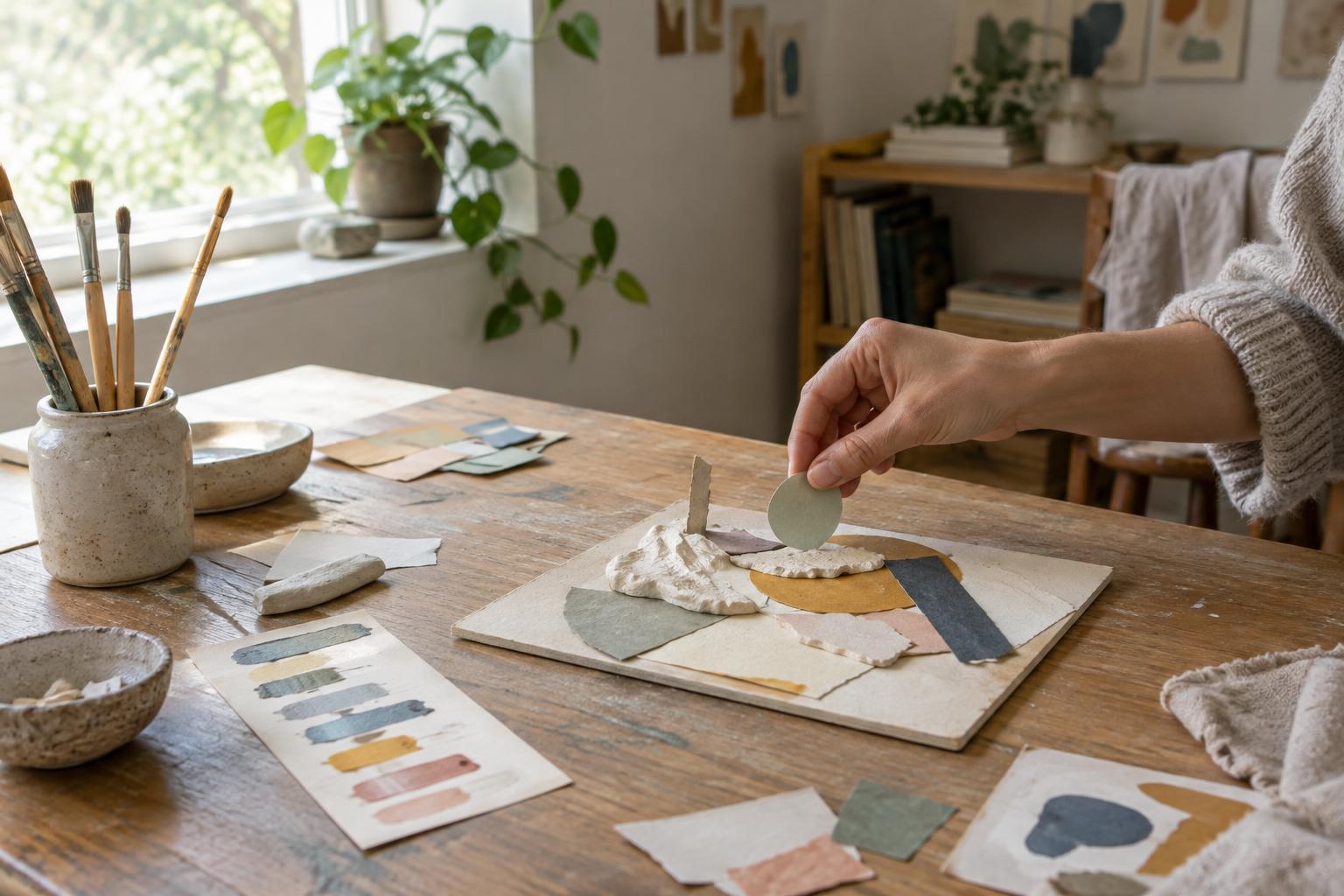
An effective brief states what is available: time, workspace, tools, materials and access to a site. Limits are not evidence that the idea is small. They can help you find a workable version of an ambitious question. If you have one afternoon and a narrow workspace, a full-room installation may be impractical, but a scale model or a sequence of placement tests could reveal which part of the idea deserves more attention.
Select a few constraints deliberately rather than accepting every habit as a rule. You might work with one found material, use only reversible connections or build something that can be carried by one person. Ask why each limit belongs in the brief. Does it sharpen the question, make the work feasible or open a new formal possibility? If a restriction only makes the process harder without teaching you anything, you can revise it.
Plan tests and record what changes
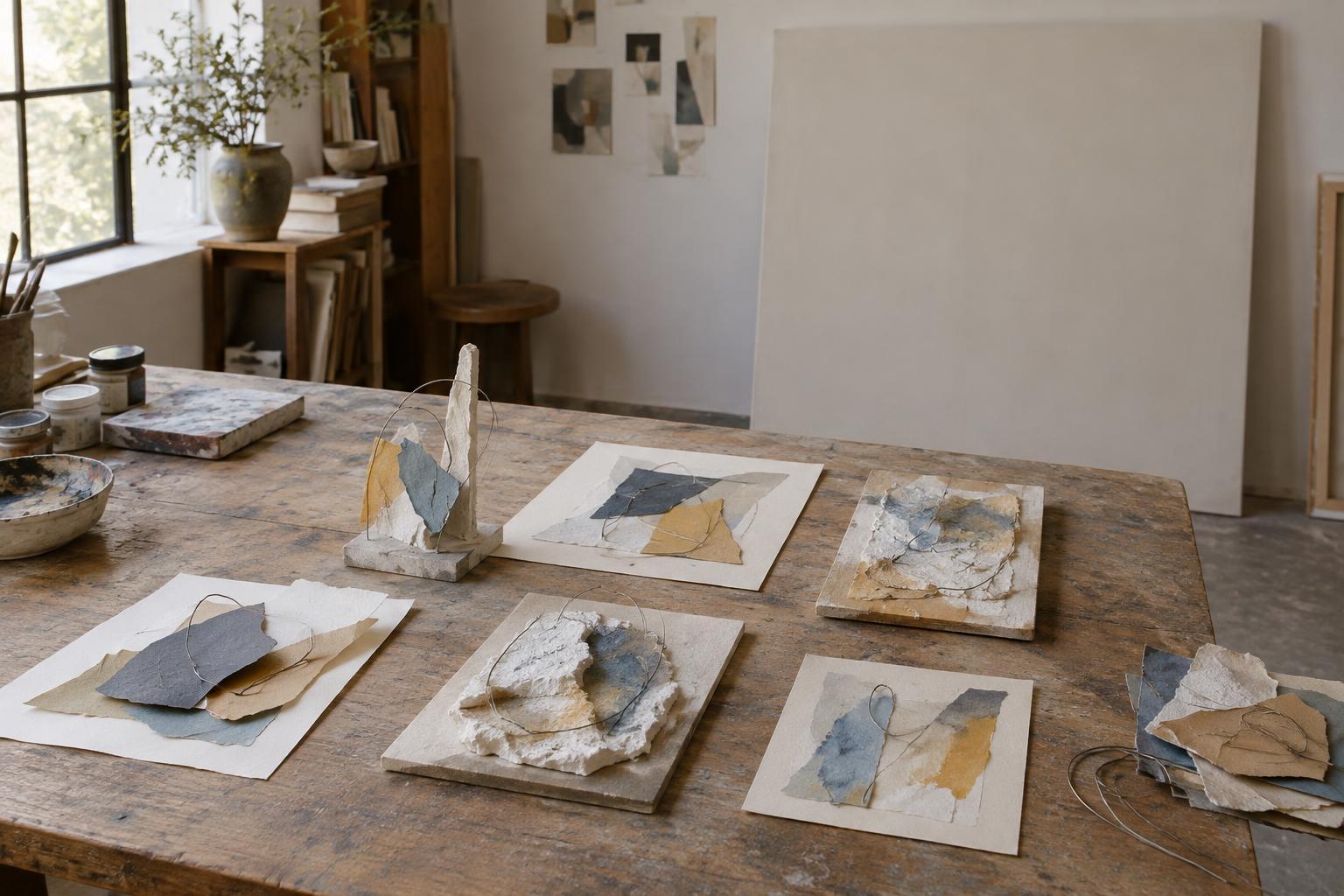
A brief becomes more useful when it names a first experiment. Instead of writing “explore transparency,” specify a test: place three translucent materials against the same light source and observe how each affects the wall behind it. For a sound or moving-image idea, you might compare two durations or positions. Keep these tests modest enough to complete; their purpose is to produce something you can respond to, not a miniature finished artwork.
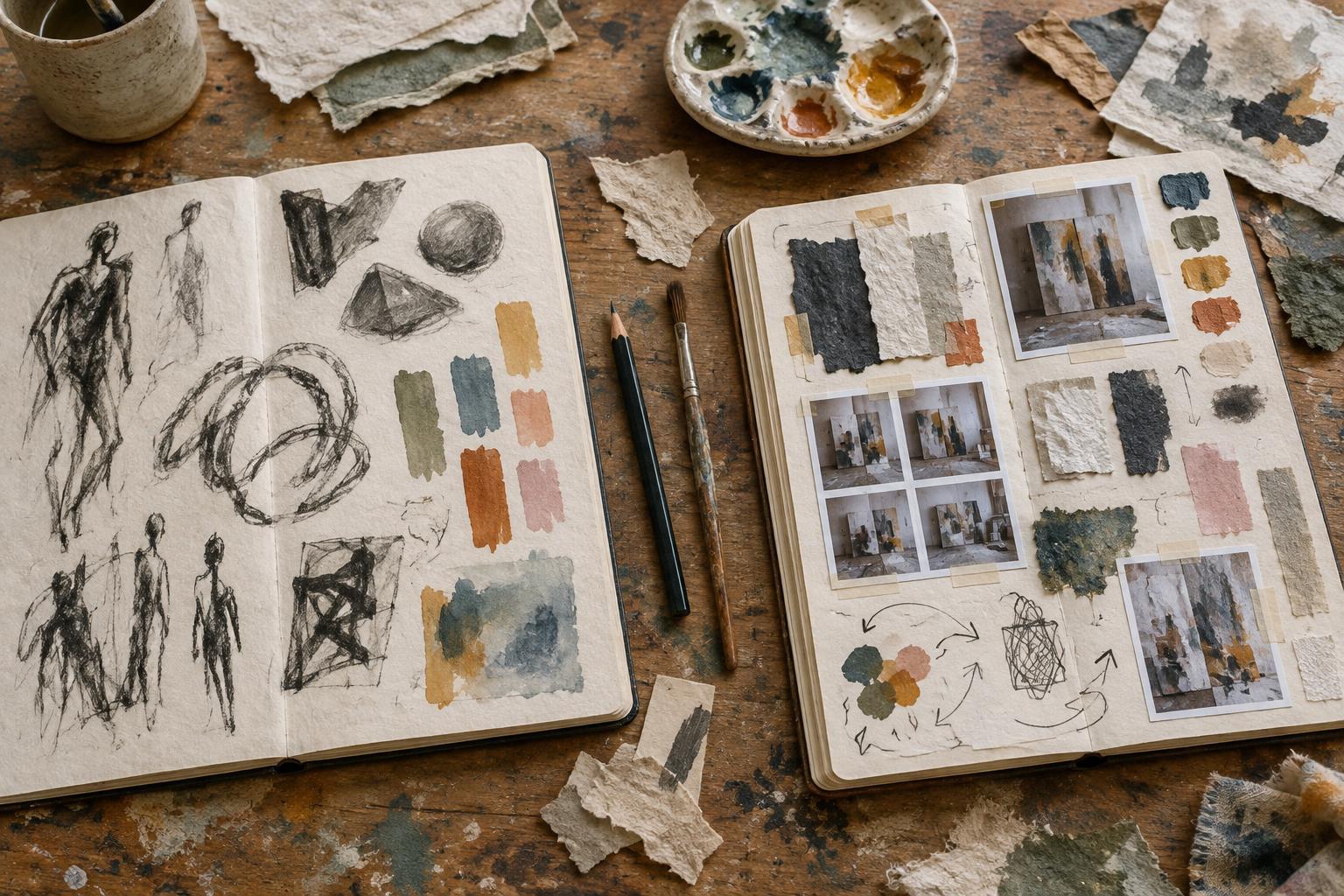
Decide how you will document the process before it becomes difficult to remember. A few photographs, a sketch with measurements or notes on what failed may be enough. Record what happened as well as what you intended. Did the material sag, reflect light unexpectedly or draw attention away from the space? Those observations can prompt the next version of the brief. Revising it after a test is not a failure to follow instructions; it is part of self-directed practice.
Define a stopping point while leaving room to change
Open-ended projects can expand indefinitely, so include a way to decide when this stage is complete. That might be three studies, one resolved arrangement or a small group of images ready to review. A stopping point does not mean the underlying question is settled. It creates a moment to step back, compare attempts and decide whether to develop the work, change direction or put the idea aside.
Finish the brief with two questions: “What would I need to learn from making this?” and “What am I willing to leave unresolved?” The first keeps the project active; the second protects it from becoming an exercise in proving a point. As work develops, return to the brief as a record of your starting assumptions. Keep the parts that still help, revise those that do not and let the work show you questions you could not have written in advance.