Begin with the work, not the theory
An artist statement is a short introduction to what you make and how you think through making it. It does not have to explain every artwork, prove that your practice matters, or tell a reader what to feel. Its most useful job is to give someone a place to start looking.
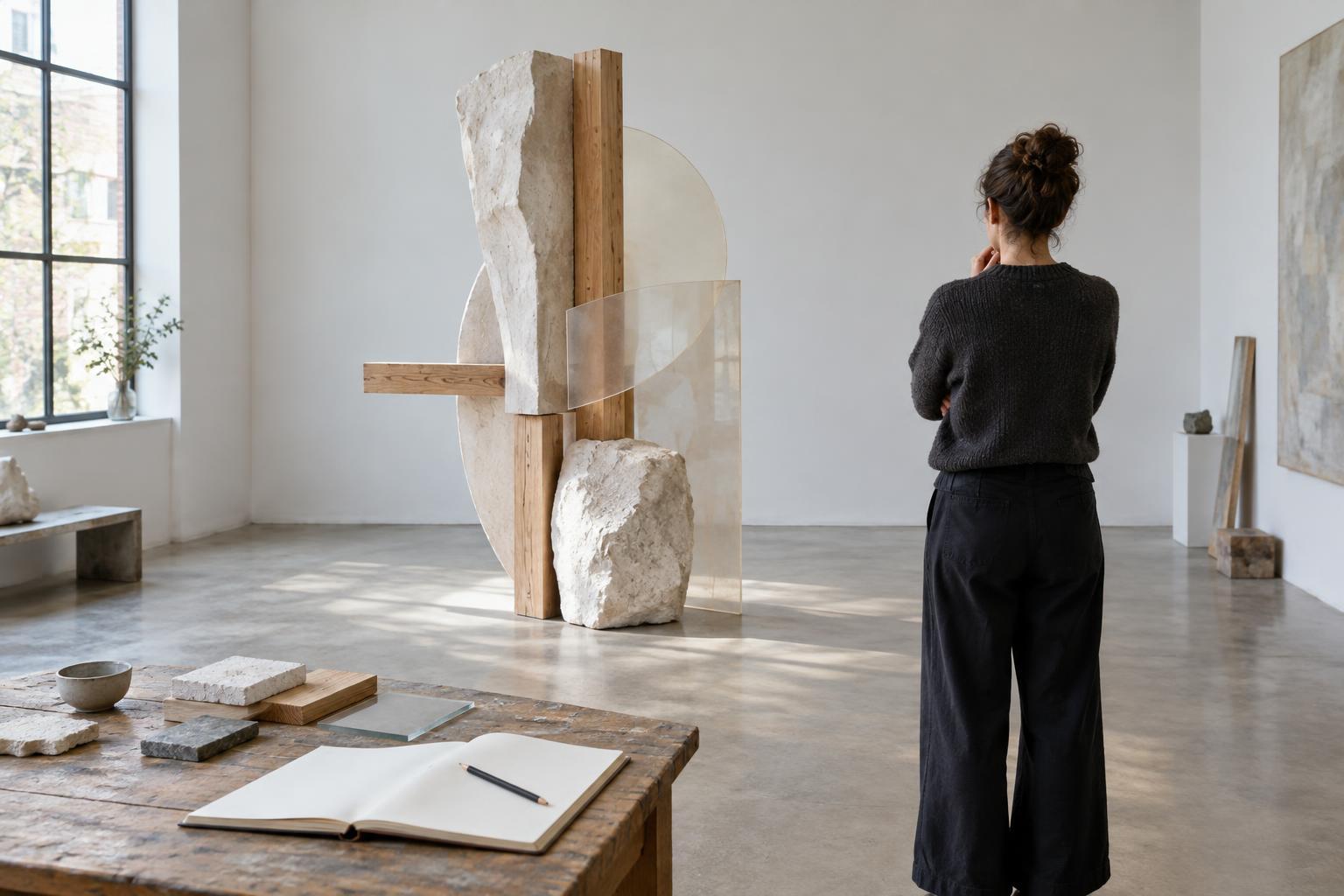
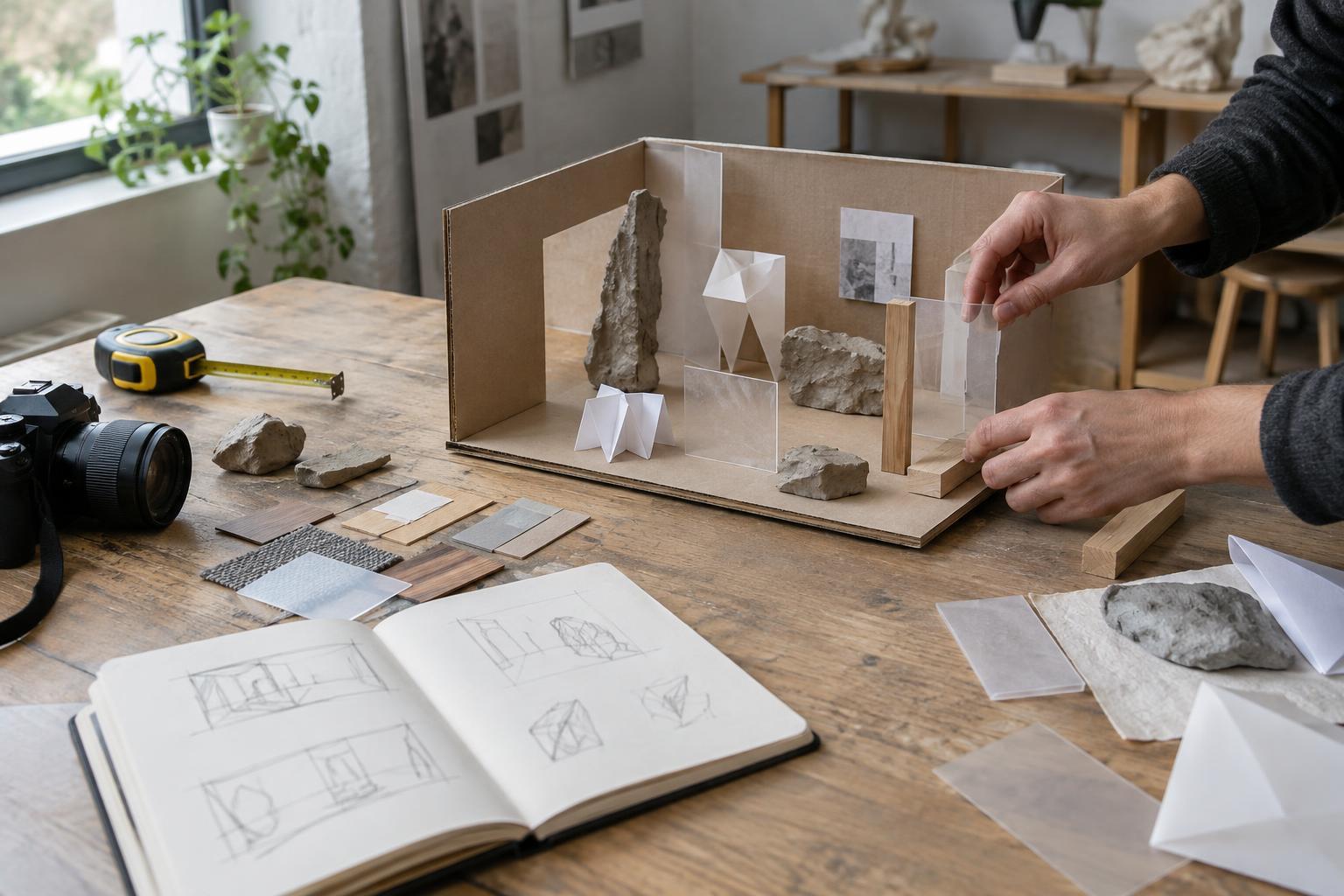
Before drafting, describe three recent works as plainly as you can. What can a viewer encounter: a suspended structure, a sequence of photographs, a projected image, an arrangement of found objects? What materials or processes made each work possible? Note what you chose to repeat, alter or leave unresolved. These observations are better starting points than a broad claim about identity or the human condition.
Look across the three descriptions for a pattern you can honestly stand behind. Perhaps you build temporary installations that change how people move through a room. Perhaps you collect discarded packaging and reassemble it into fragile displays. A statement can begin with that recurring action, then explain what keeps you returning to it.
Connect choices to questions
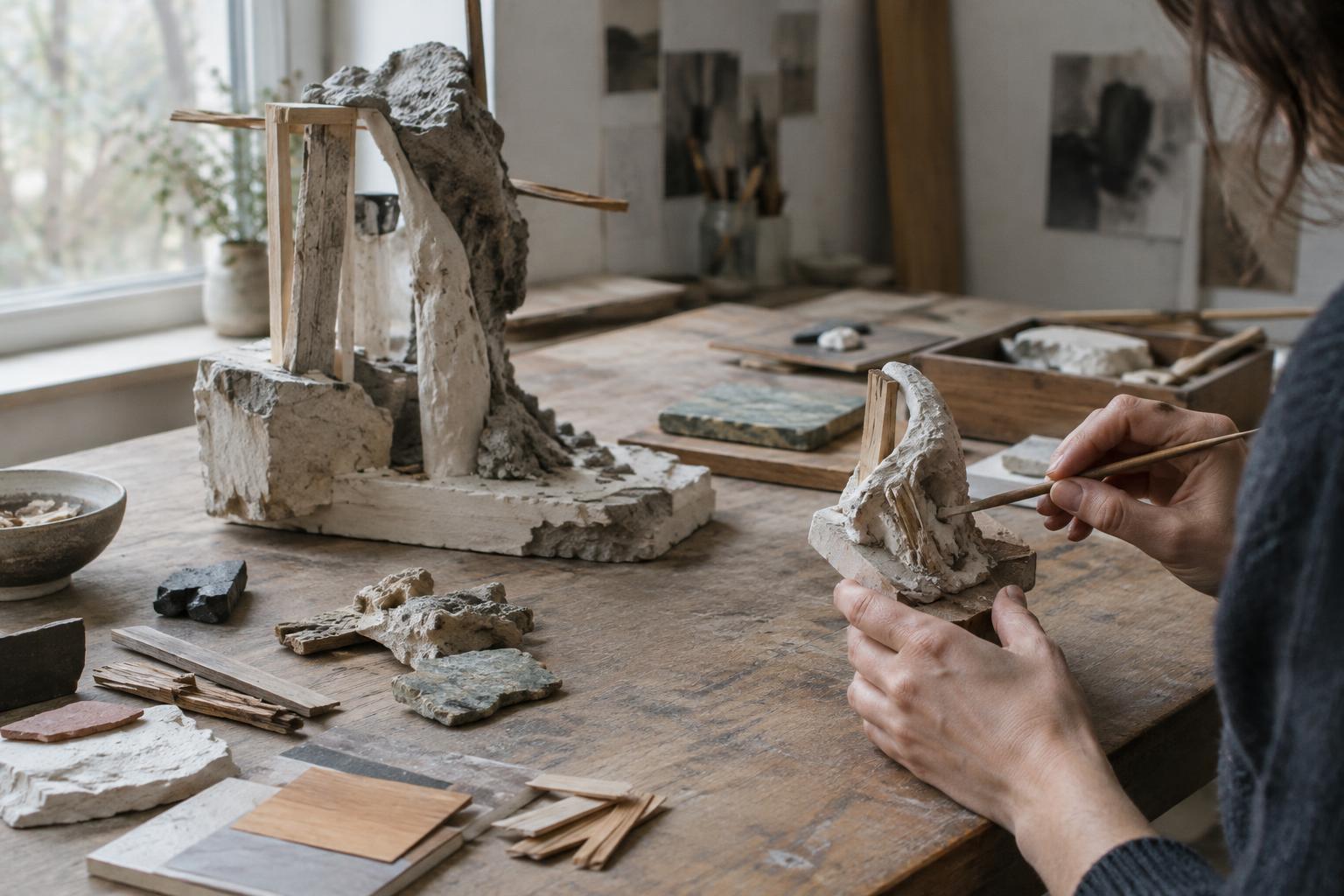
Materials and techniques become more informative when you explain why they are part of the work. Instead of listing plaster, fabric and video, describe what each allows you to do. A fabric screen might interrupt a sightline while remaining easy to move. A looped video might let a small gesture accumulate meaning through repetition. These connections help readers see method as a set of decisions, not a catalogue of supplies.
You can also name the questions guiding those decisions. A question such as “How does a room change when its boundaries are difficult to see?” leaves room for experimentation. It is more grounded than a claim that the work reveals a universal truth about space. If your interests have shifted, describe the questions that animate your current work rather than trying to make every past project fit one permanent theme.
Be careful with statements of intention. You may intend to invite close attention, but you cannot guarantee that every viewer will respond that way. Phrases such as “I use slow transitions to encourage prolonged looking” describe a choice and a hope without dictating an outcome.
Use language a viewer can test
Abstract terms can be useful, but they need something visible or tangible beside them. If you write about memory, say what form memory takes in the work: copied images, worn surfaces, repeated instructions or objects placed out of sequence. If you write about participation, explain what visitors can do. Specific details let readers return to the artwork and decide what they notice for themselves.
Try replacing a sentence such as “My interdisciplinary practice interrogates the instability of perception” with a description of an action: “I layer translucent drawings so that images appear and disappear as viewers move past them.” The second sentence does not rule out complex ideas. It shows where those ideas enter the experience of the work.
Read each sentence and ask whether it could describe hundreds of unrelated practices. If it could, add a detail that belongs to yours. You do not need specialized vocabulary to demonstrate seriousness. Use a technical term when it identifies something precisely; otherwise, ordinary language often serves the work better.
Give the statement a workable shape
A practical first draft can follow a simple progression. Open with what you make and the recurring concern behind it. Move to the materials, actions or working conditions that shape the results. Close by describing what remains open for you or what kind of encounter the work makes possible. This is a structure for clarity, not a rule about how artists must write.
Keep the statement distinct from a biography. Where you studied or exhibited may be relevant elsewhere, but those facts do not replace an account of the work. Likewise, a statement is not a wall label for every individual piece. If an exhibition brings a particular group of works together, you can write a shorter version that addresses that group without rewriting the history of your entire practice.
First person is often the most direct voice: “I assemble,” “I photograph,” “I return to.” If third person suits the setting, it can work too. Whichever you choose, favor active verbs and avoid switching voice without a reason.
Revise against what you actually make
Set the draft beside images, notes or a recent work in progress. Does it describe decisions that are present in the work, or only ideas you wish were there? Mark any sentence that sounds impressive but gives a reader nothing to look for. Replace it with an observation, a process or a question you can discuss without rehearsing the wording.
Ask a trusted reader to identify what they picture after reading the statement, then compare that picture with the work. A gap does not always mean the writing has failed; the work may resist a neat summary. But if the reader imagines an entirely different practice, revise the concrete descriptions first. Reading the statement aloud can also expose long sentences and repeated claims.
Treat the result as a working document. New materials, collaborations or exhibition settings may change what needs emphasis. Keep a fuller version for your own reference and make shorter versions for contexts with limited space. The aim is not to find a perfect statement that stays fixed forever. It is to offer an honest, usable introduction to the work you are making now.