Exhibition InterpretationAn exhibition may suggest a direction without demanding that every visitor follow it. Learn how to notice spatial cues, choose your own pace and make sense of a show even when you begin in the middle.
Read article · 4 min↗
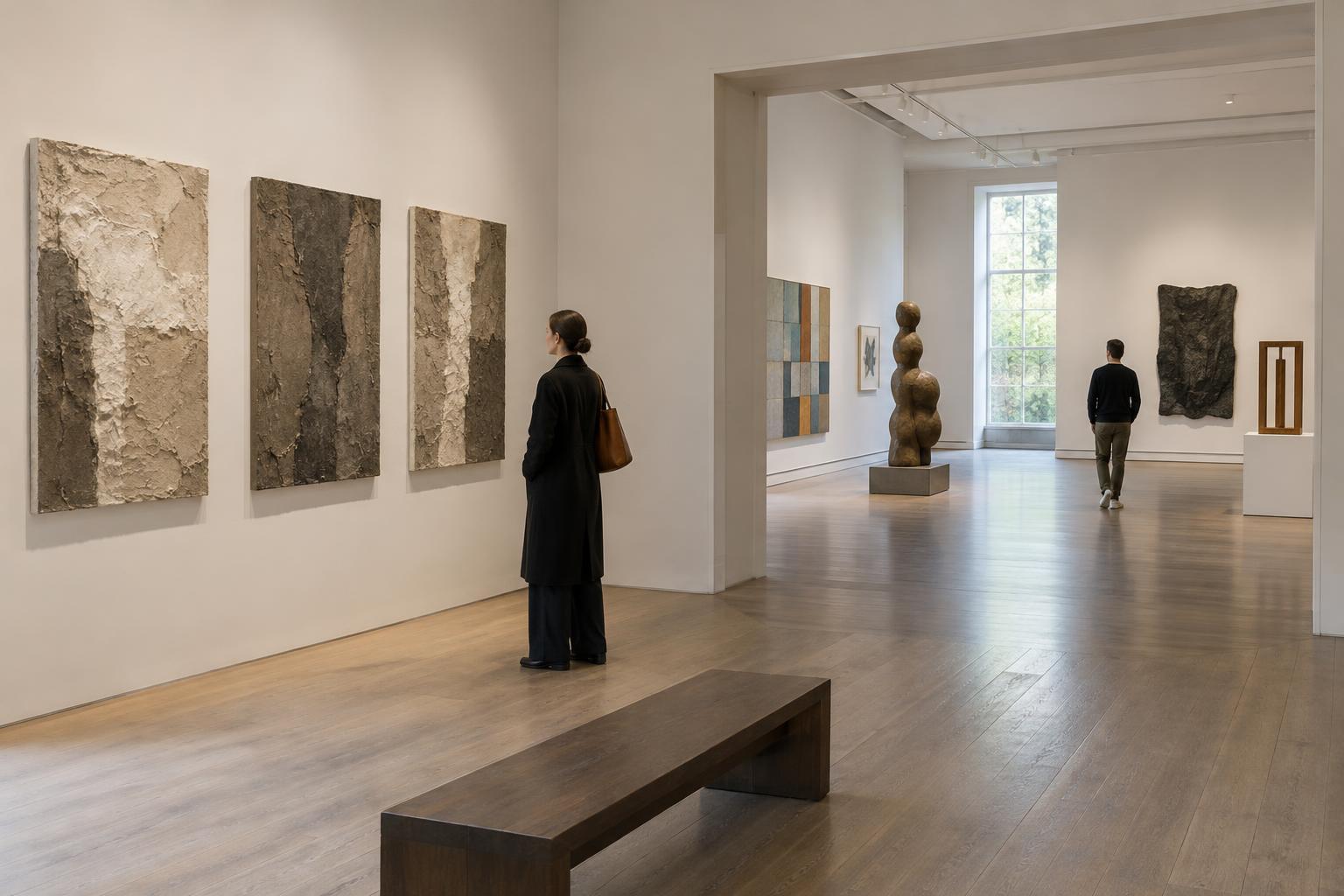
Exhibition InterpretationA solo exhibition and a group show invite different kinds of attention. Learn how to read an artist’s recurring decisions, compare works across artists, and use the exhibition space without treating the wall text as the only guide.
Read article · 4 min↗
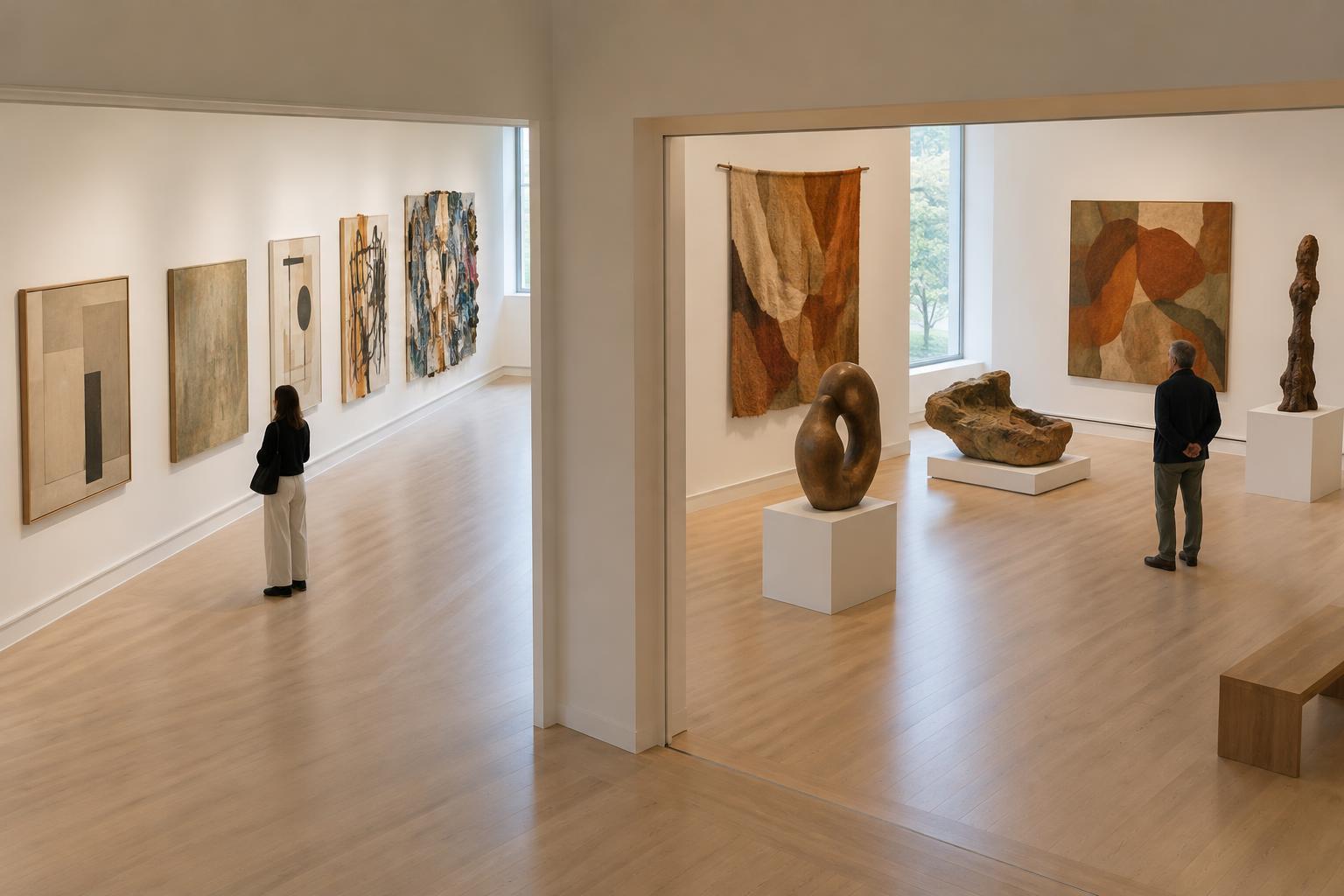
Exhibition InterpretationAn exhibition’s organizing principle changes the story visitors encounter. Chronological displays foreground change over time, while thematic displays draw connections across works, makers and periods. Understanding both approaches can help you look more closely—and notice what each arrangement leaves out.
Read article · 4 min↗
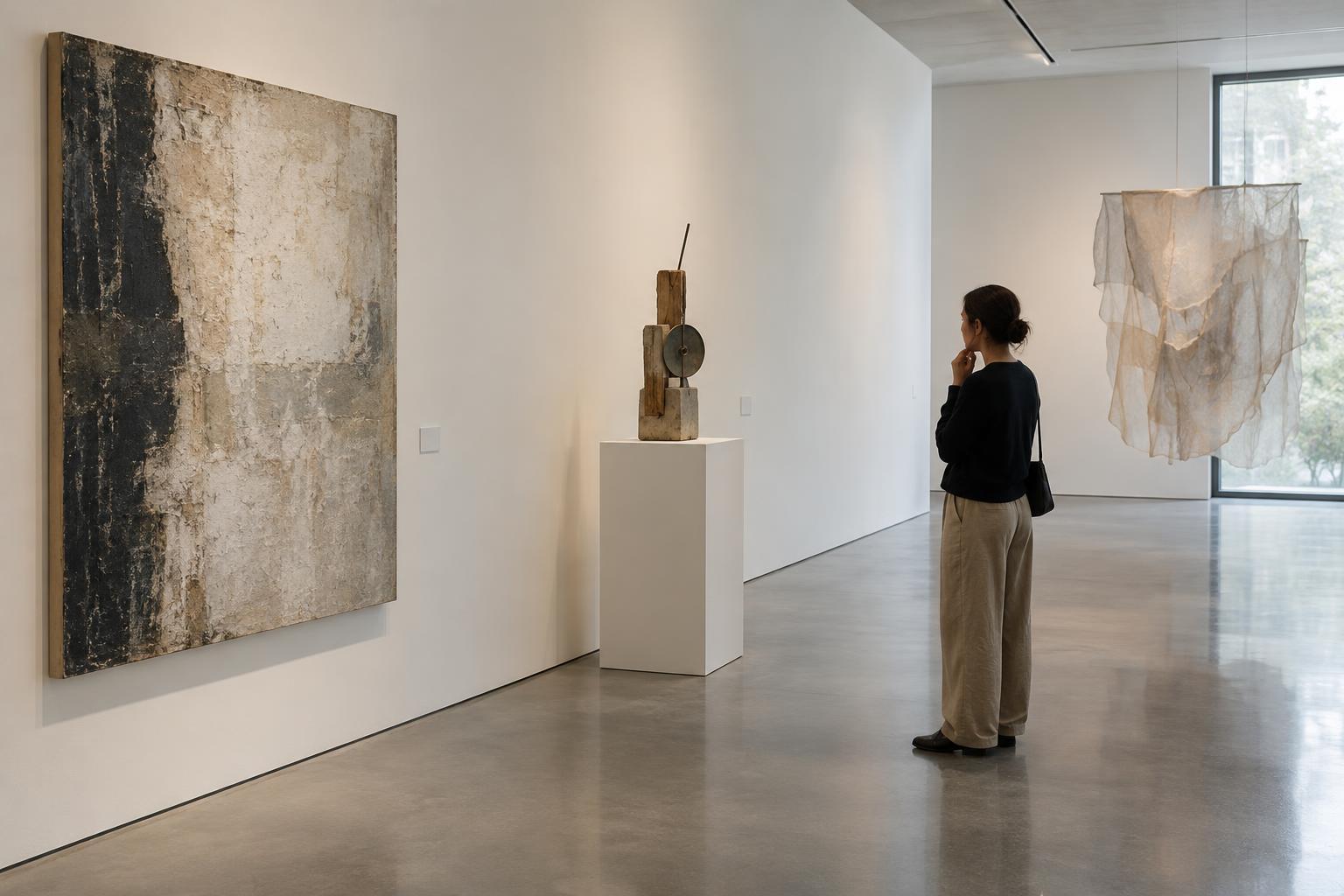
Exhibition InterpretationAn exhibition does more than bring artworks together. Its selection, layout, labels and contrasts can propose a way of understanding them. Learn how to trace that curatorial argument while leaving room for your own interpretation.
Read article · 4 min↗
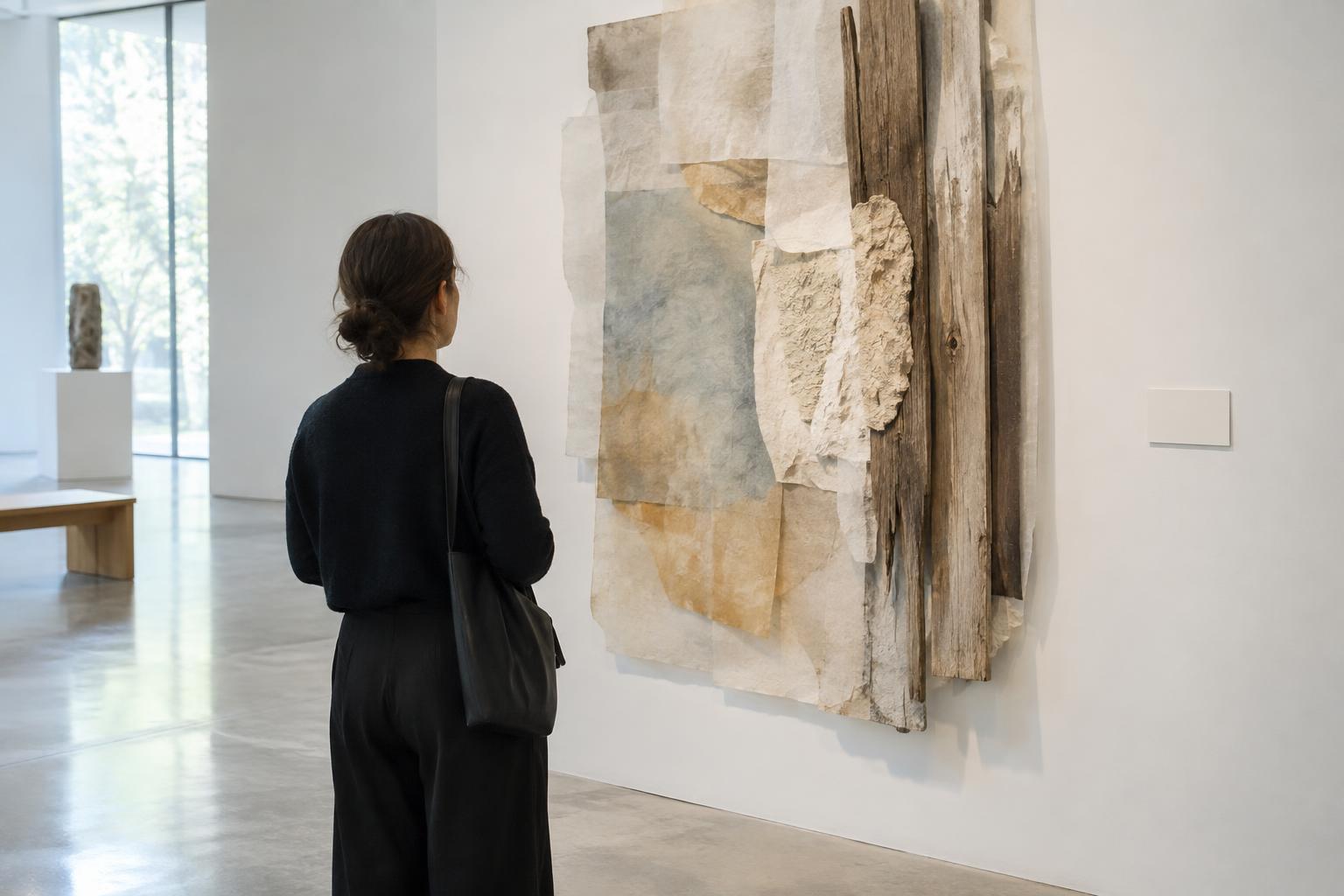
Exhibition InterpretationAn artwork label can give you a foothold without giving you a final answer. Learn how to use titles, dates, materials and curatorial text as clues while leaving room for your own observations.
Read article · 4 min↗
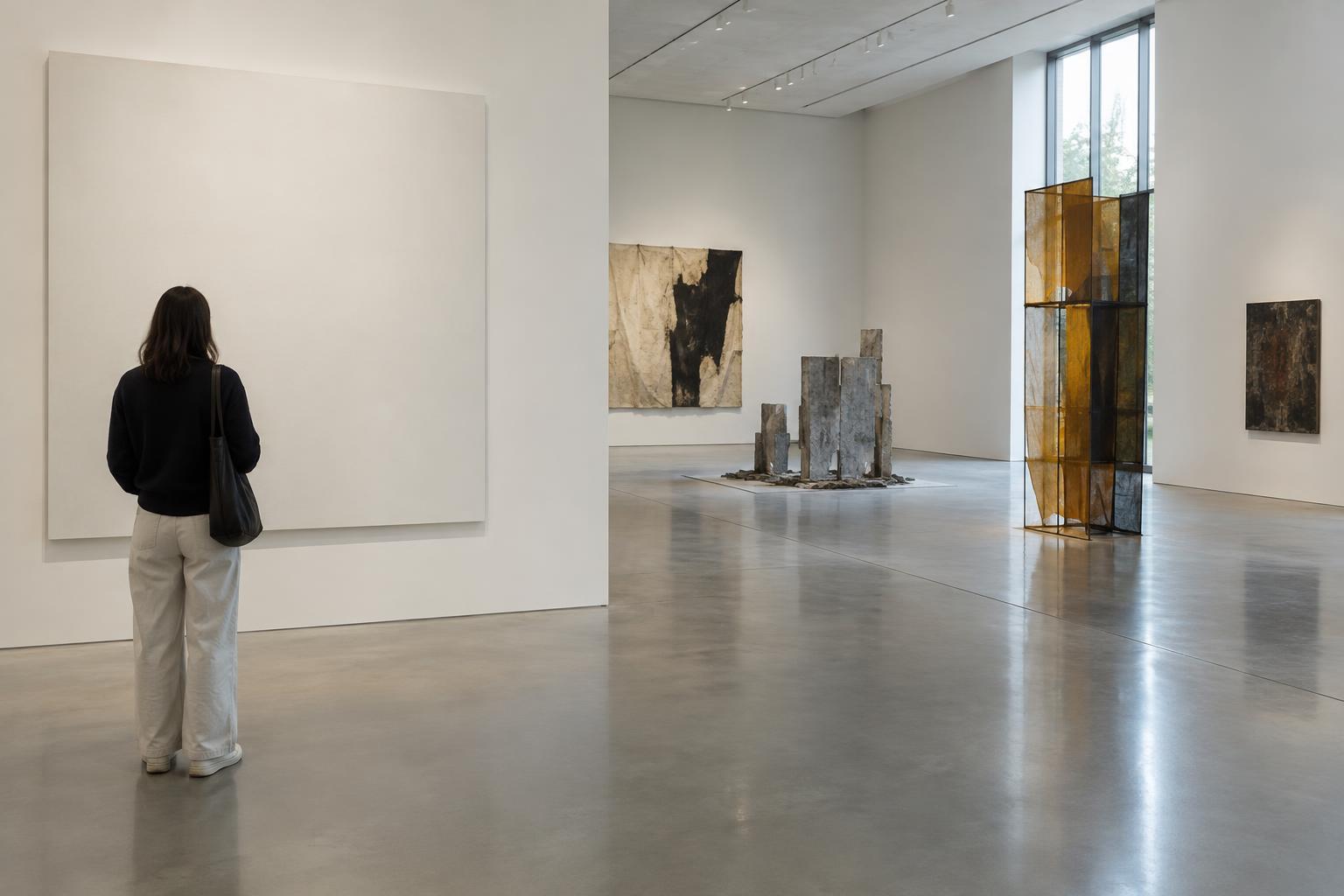
Exhibition InterpretationAn introductory wall text can orient a visitor without dictating what every artwork means. Learn how to use its title, context and curatorial language as starting points for looking, questioning and making your own connections.
Read article · 4 min↗
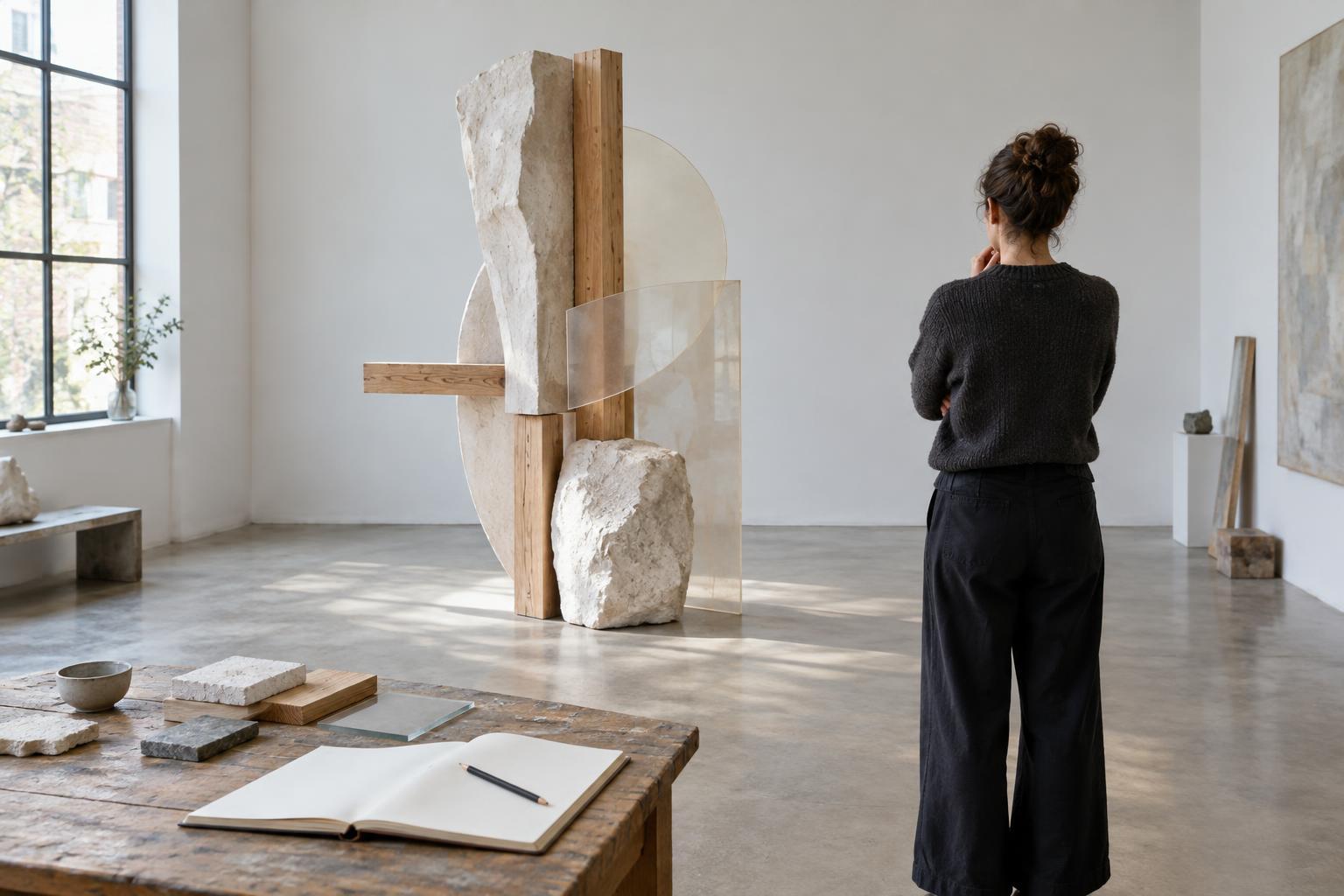
Creative PracticeFinishing an artwork is also a chance to understand how it was made. A practical review can help you notice what changed, what worked in the space, where the process became difficult, and which lessons are worth carrying into your next project.
Read article · 4 min↗
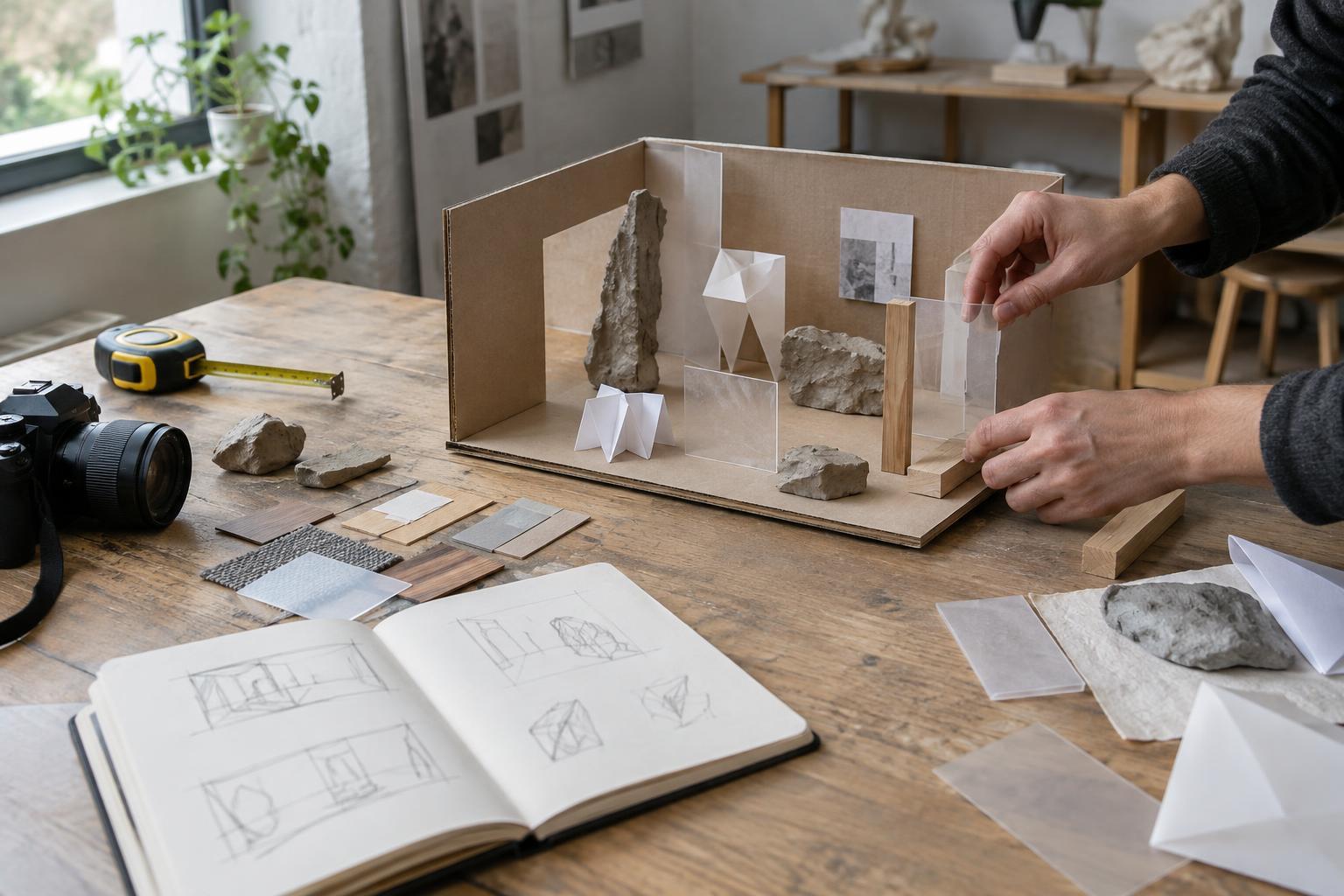
Creative PracticeCreative projects need room for discovery, but they also benefit from a workable plan. Learn how to avoid vague goals, unchecked assumptions about materials and space, unrealistic schedules, scattered documentation, and plans too rigid to accommodate change.
Read article · 4 min↗
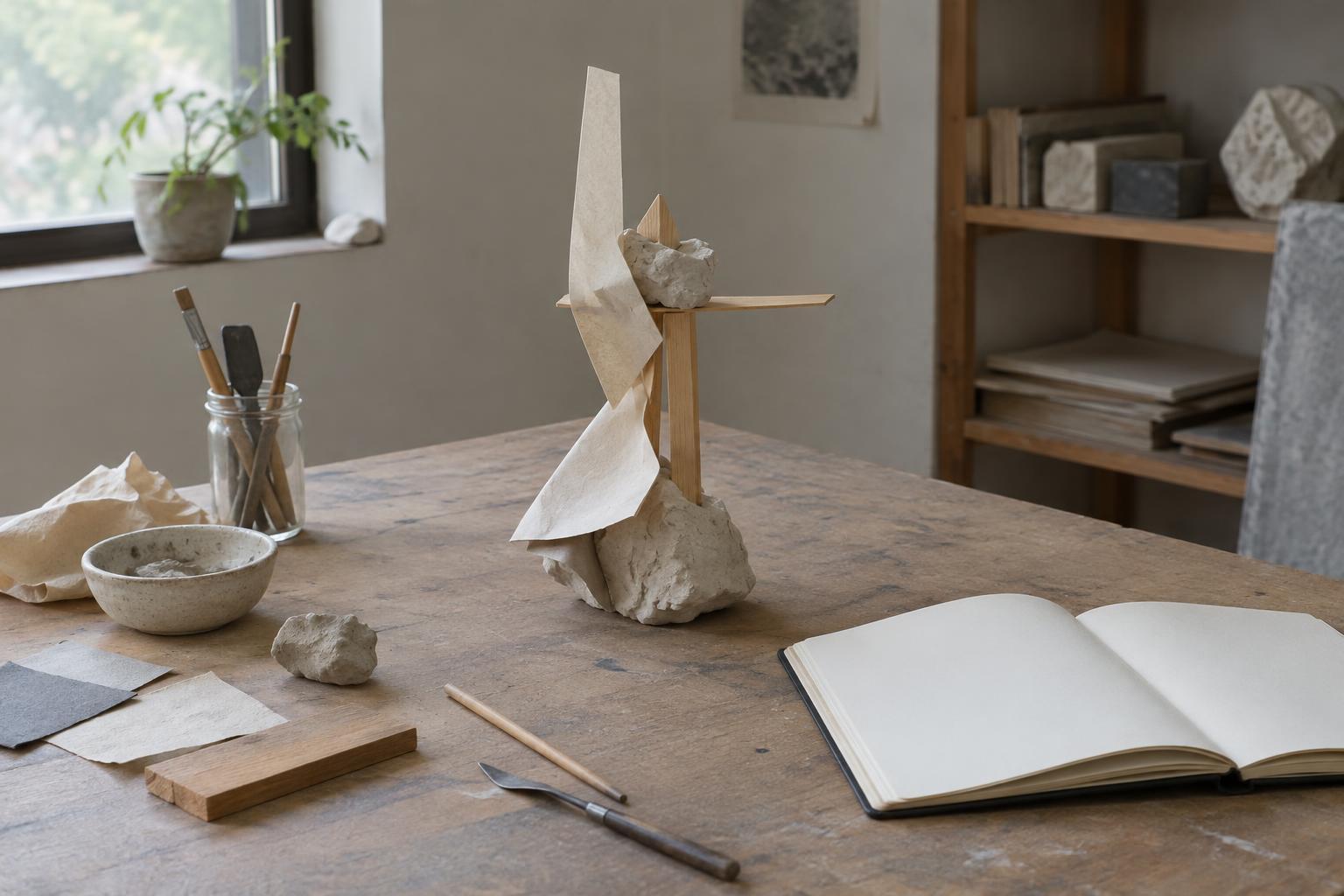
Creative PracticeAn artist statement can be clear without explaining away the work. Start with what you make, describe the decisions that shape it, and give readers a useful way into the experience.
Read article · 4 min↗
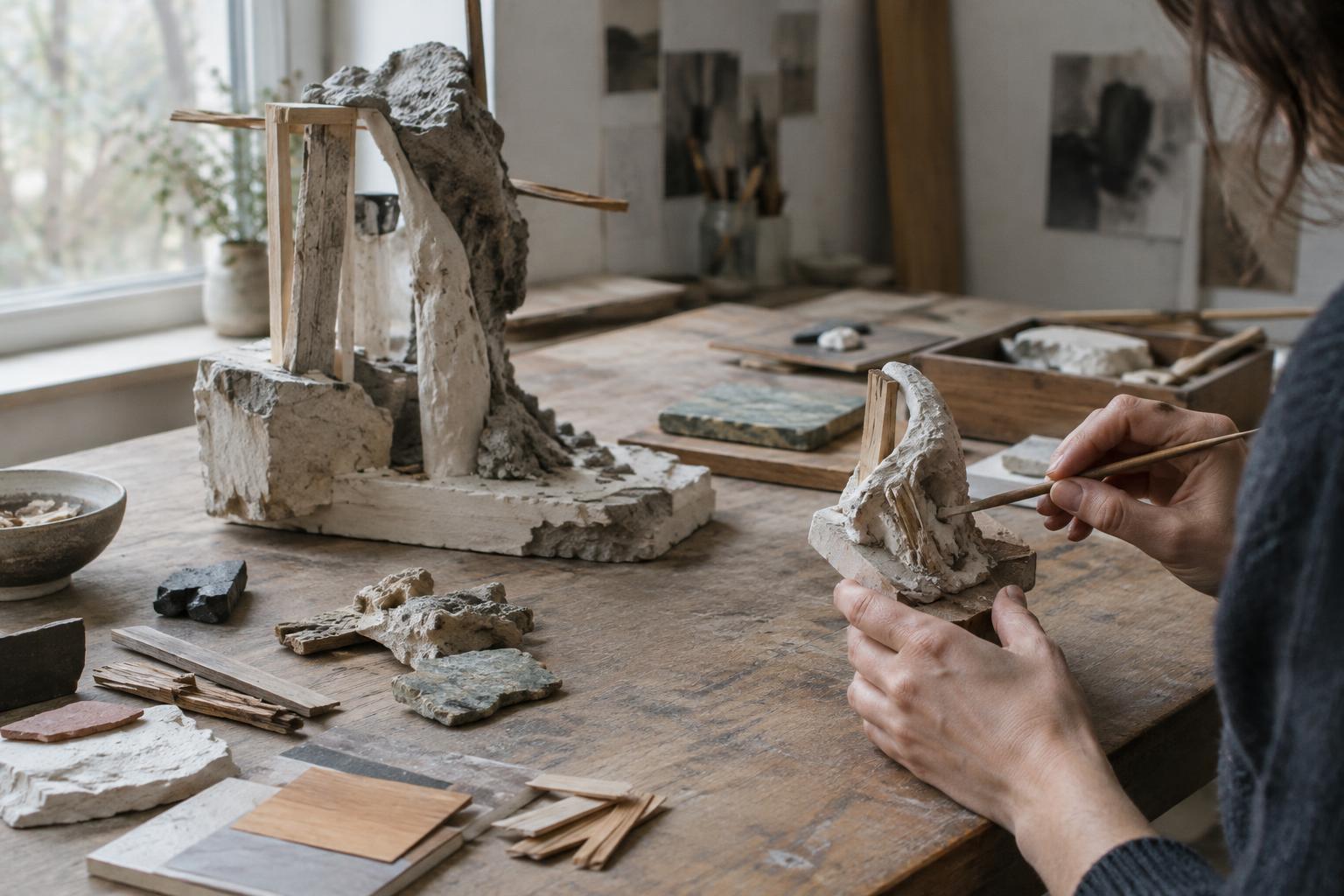
Creative PracticeAn unfinished art project does not have to be completed according to its first plan. Learn how to examine what remains, identify the question worth keeping, and make a small, useful next move.
Read article · 4 min↗
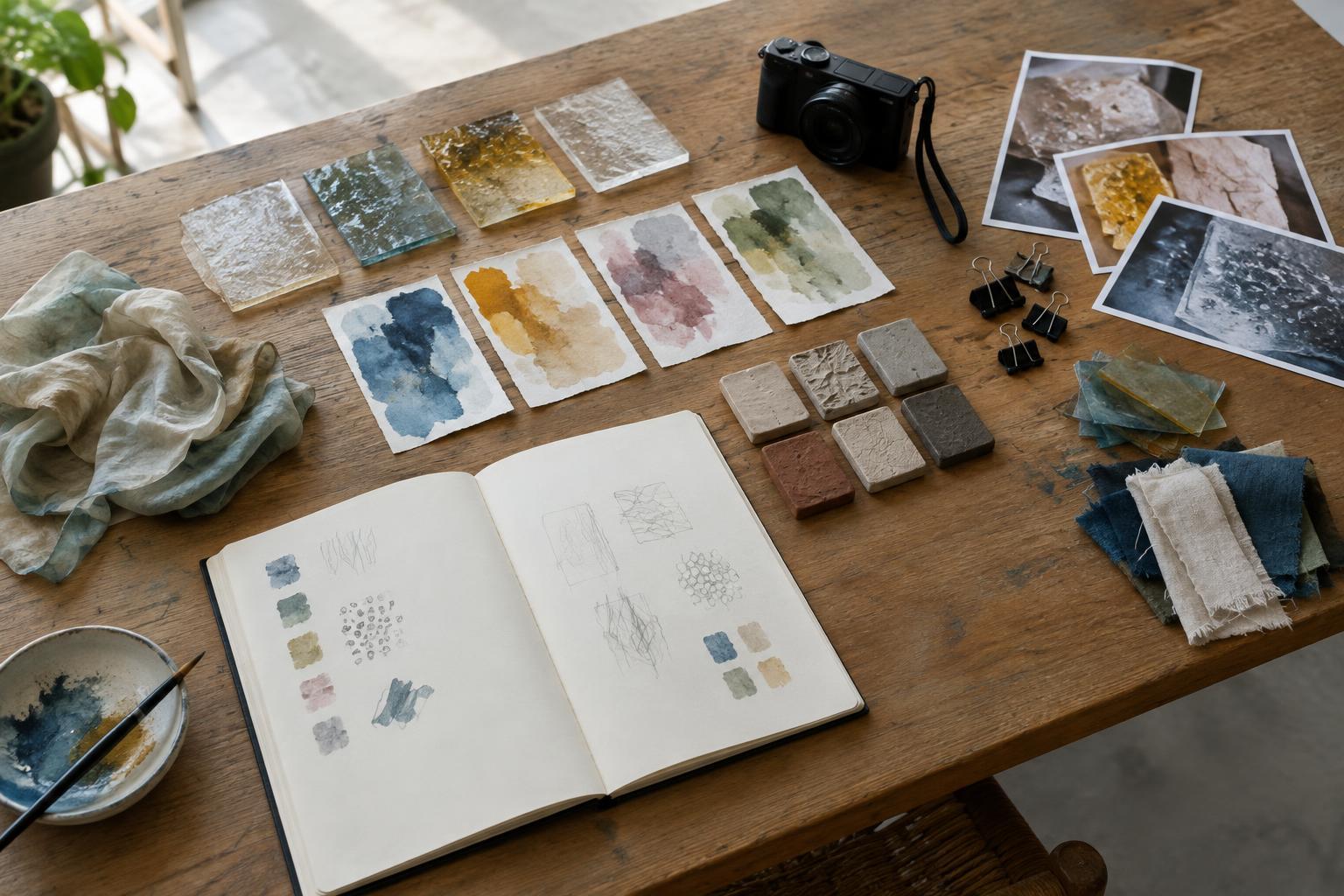
Creative PracticeA useful record of an art experiment captures more than the finished result. Learn how to note your question, materials, conditions, changes and observations so you can return to a test with a clearer sense of what to try next.
Read article · 4 min↗
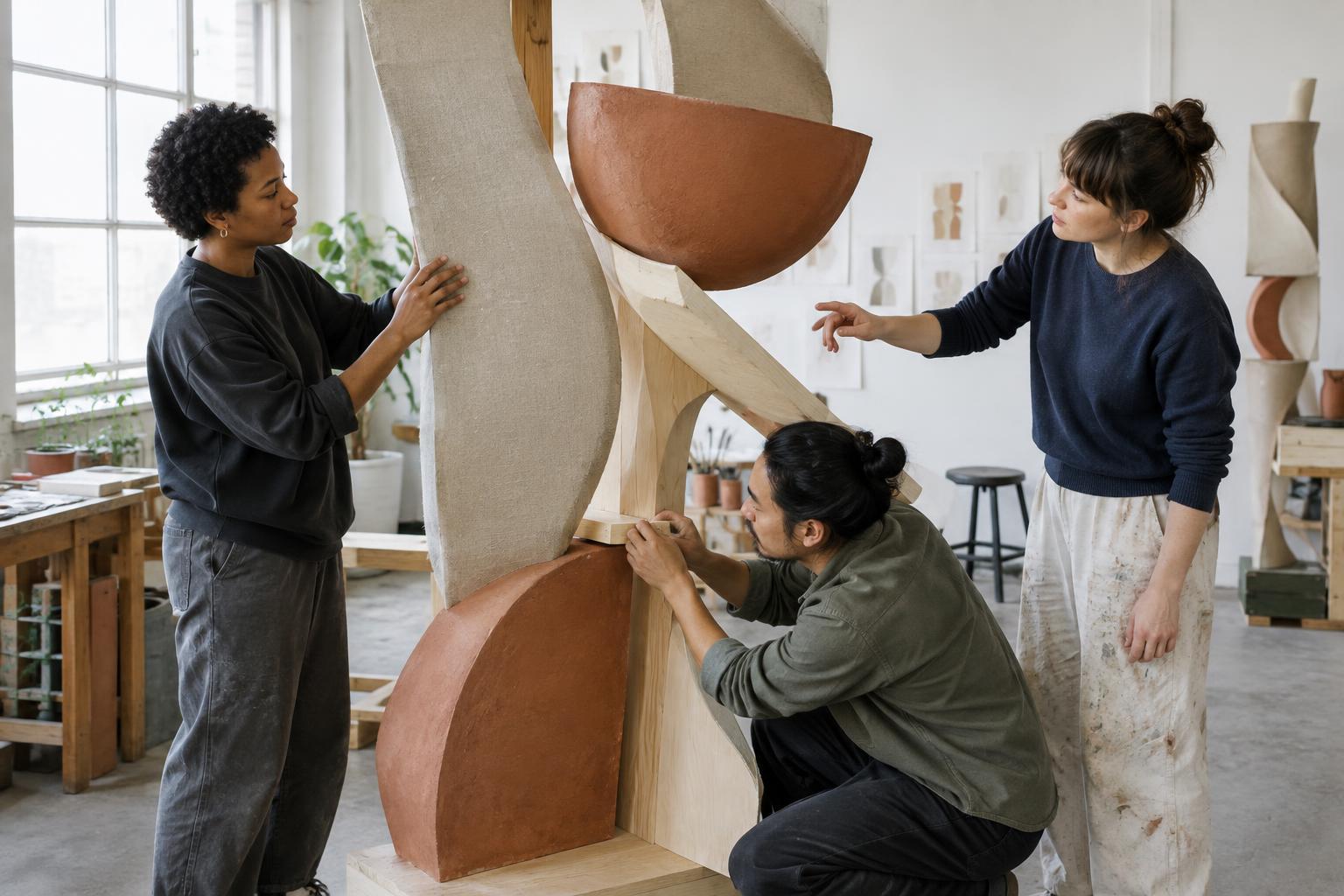
Creative PracticeA shared artwork needs more than a shared idea. Clear conversations about roles, decisions, credit and changes can give collaborators room to experiment without leaving essential questions unresolved.
Read article · 4 min↗
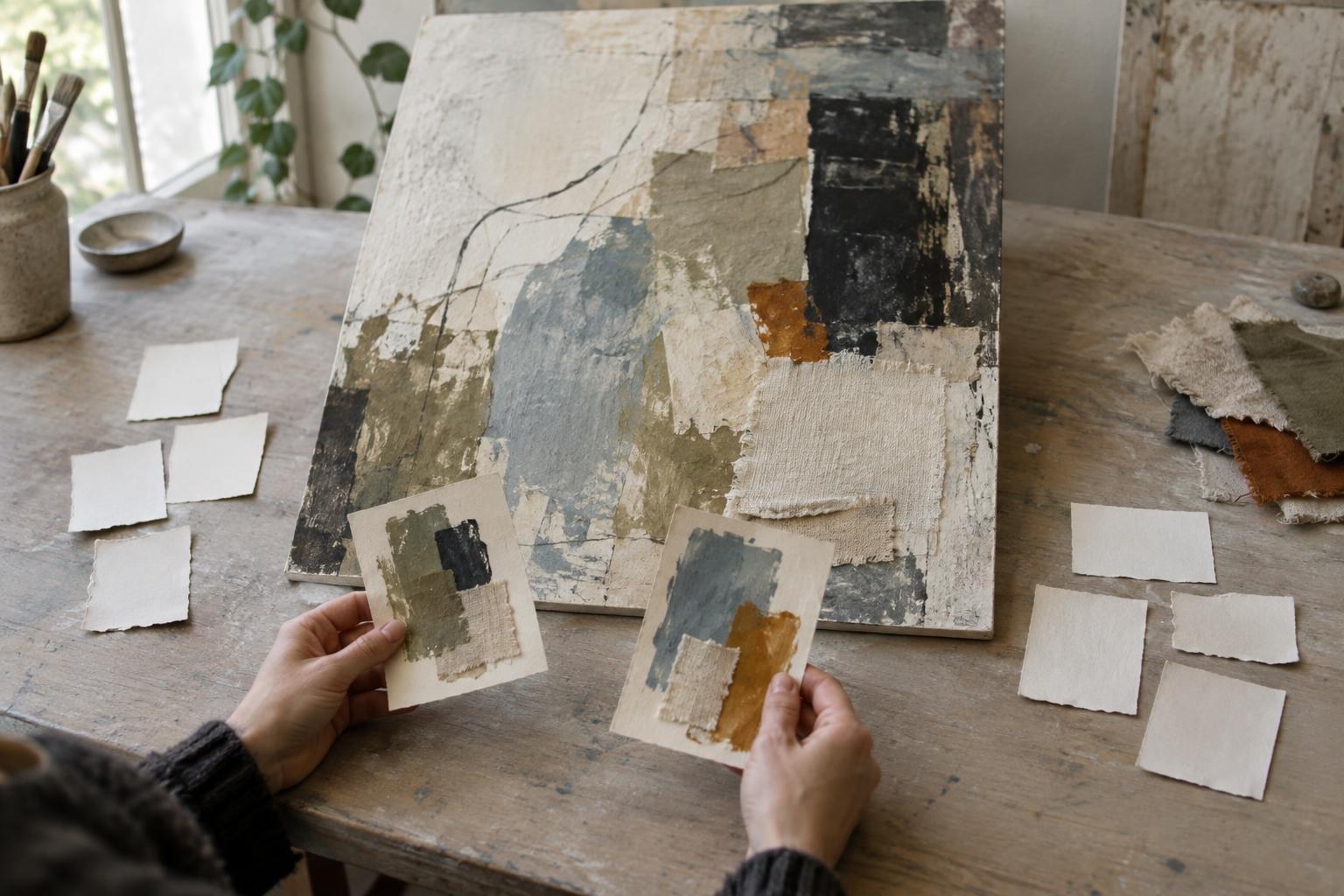
Creative PracticeOne viewer wants more explanation; another wants less. Conflicting feedback does not have to become a vote on whether your work succeeds. Learn how to sort comments by context, test useful suggestions, and make decisions that serve the work.
Read article · 4 min↗

Creative PracticeA useful art critique does more than announce a preference. Learn how to describe what you see, connect observations to their effects, ask productive questions, and offer suggestions that leave the artist room to decide what comes next.
Read article · 4 min↗
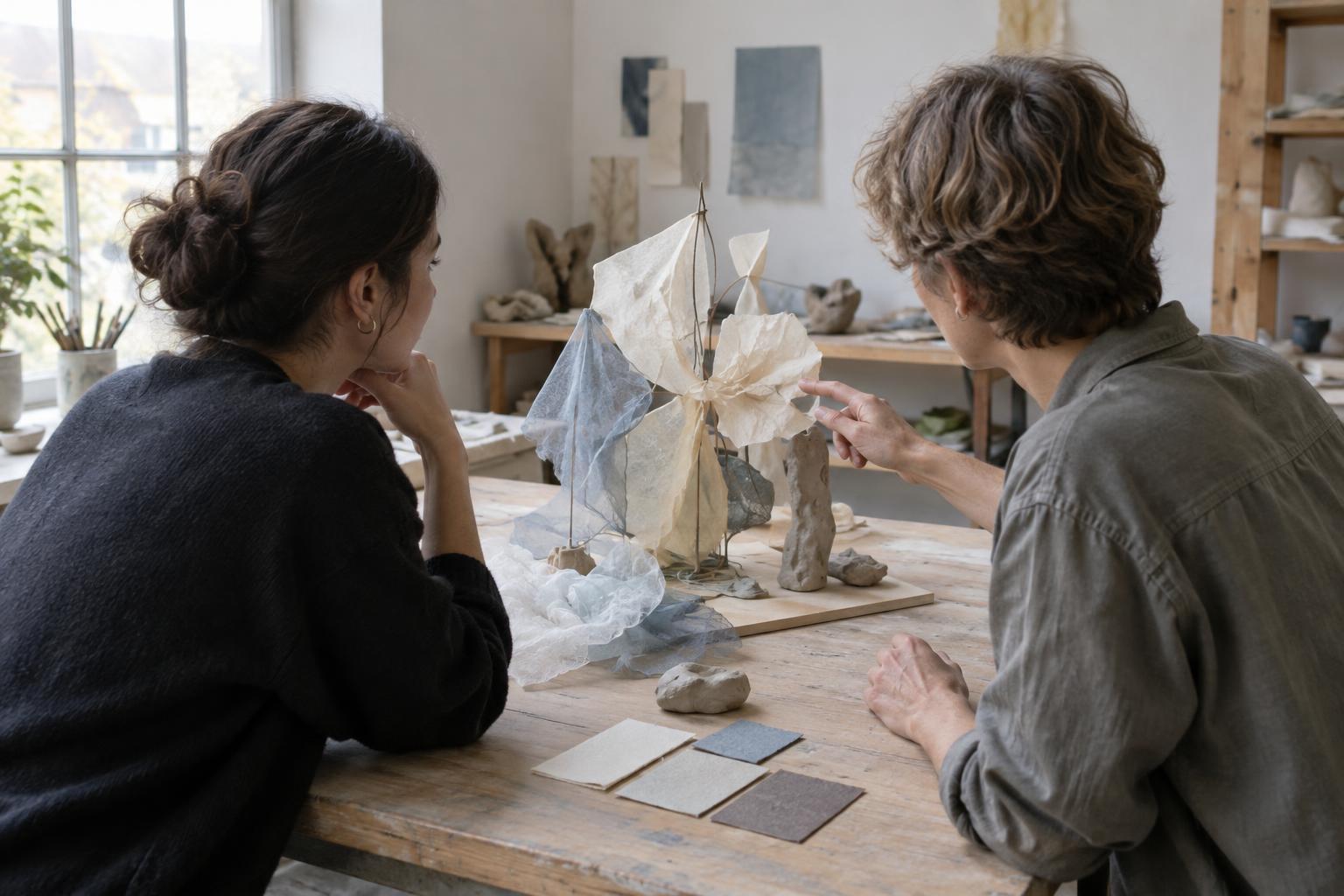
Creative PracticeFeedback is most useful when it meets a work at the right stage. Learn how to choose a question, give viewers enough context, listen without defending every decision, and turn their responses into a practical next step.
Read article · 4 min↗
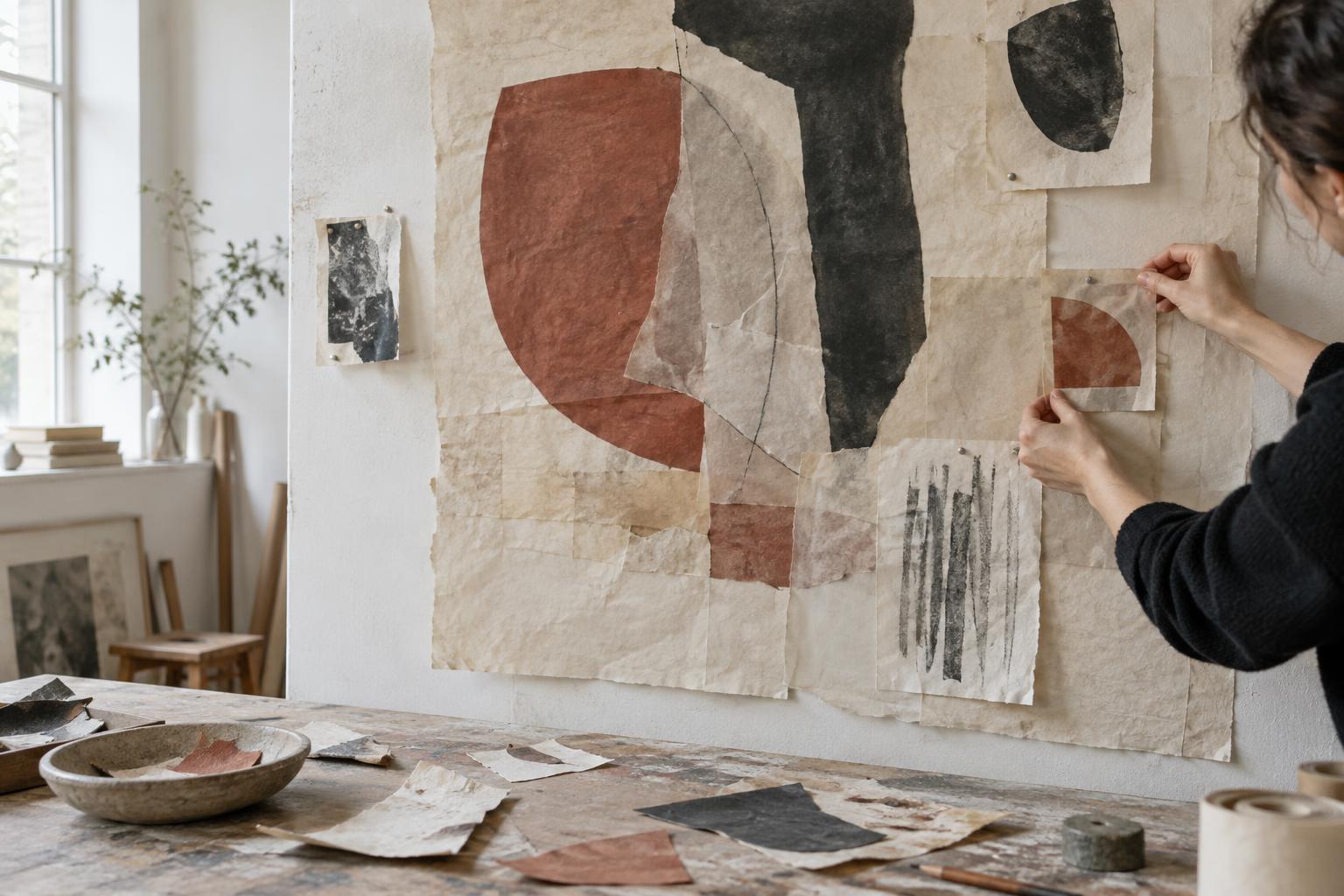
Creative PracticeRevision is more than fixing what looks wrong. A practical approach to identifying an artwork’s strongest decisions, testing changes with purpose, and removing elements that no longer serve the work.
Read article · 4 min↗
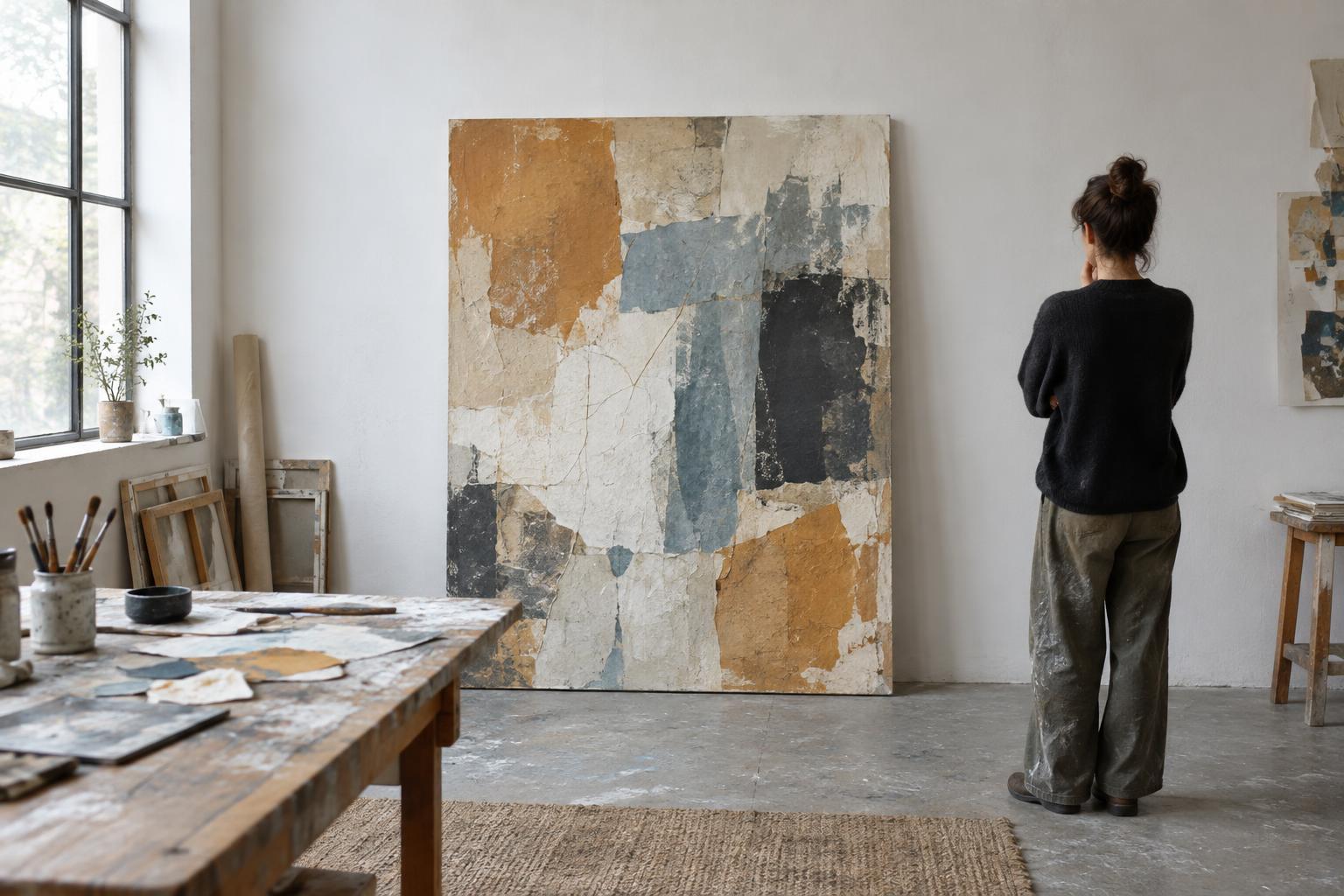
Creative PracticeFinishing an artwork is rarely a matter of making every detail perfect. These practical questions can help artists distinguish a useful revision from a habit of continuing, and decide when a work is ready to leave the studio.
Read article · 4 min↗
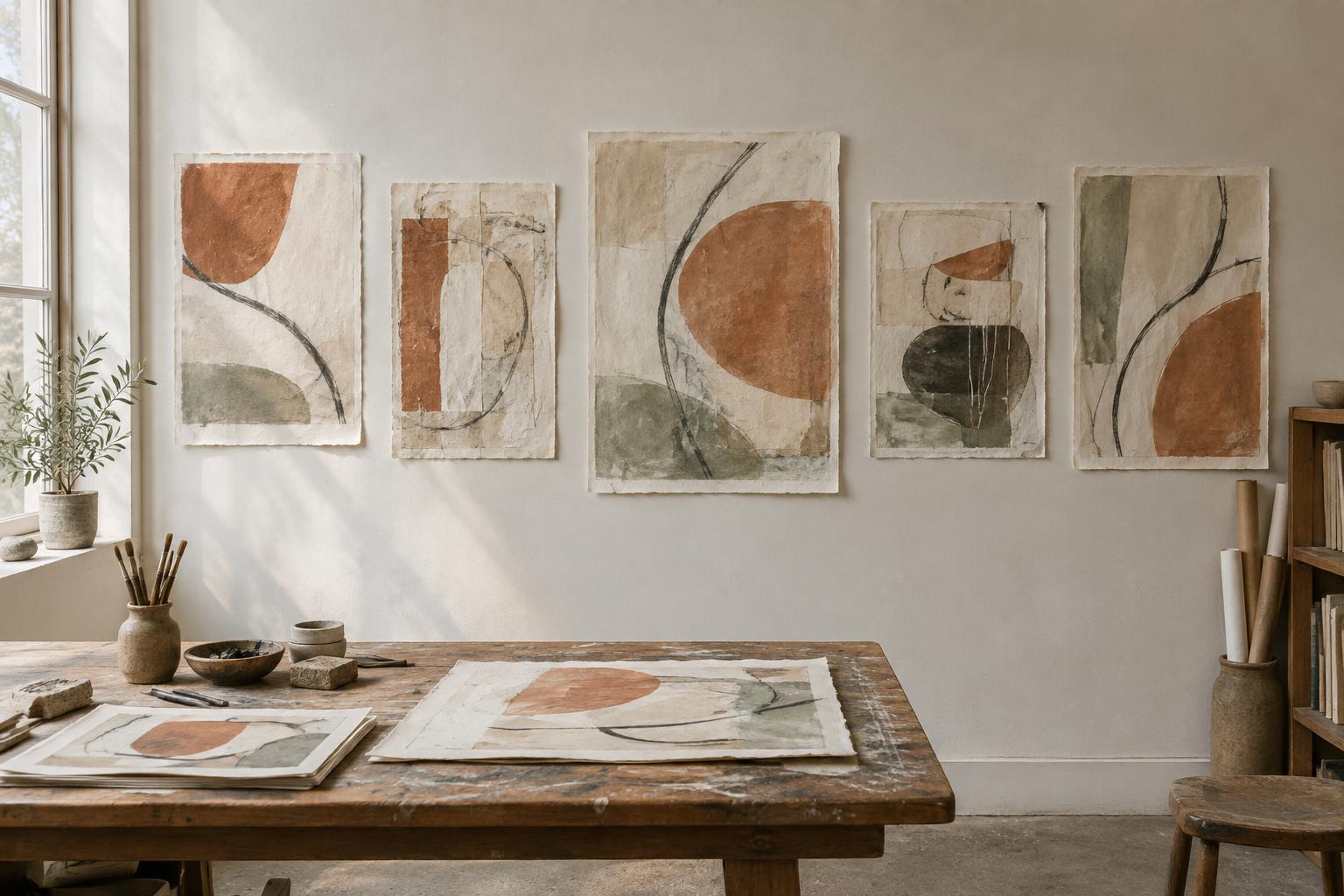
Creative PracticeA strong art series gives viewers a thread to follow while leaving room for each work to make a distinct contribution. Learn how to choose a guiding question, set useful constraints, vary your approach and decide when a series is complete.
Read article · 4 min↗
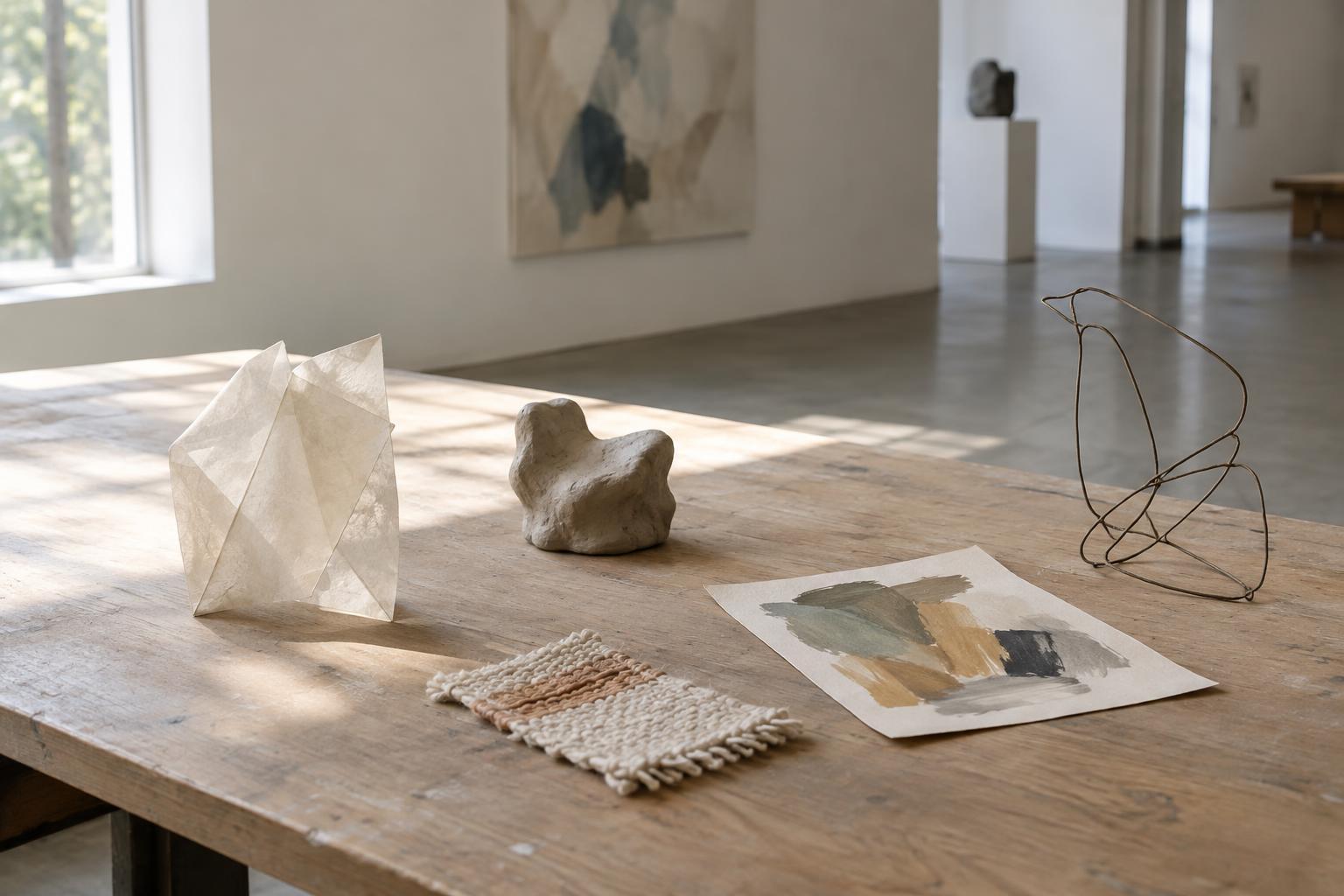
Creative PracticeA medium is more than a material preference. It shapes how a work occupies space, unfolds over time and meets its audience. This guide offers practical questions and small tests for choosing a form that serves the project.
Read article · 4 min↗
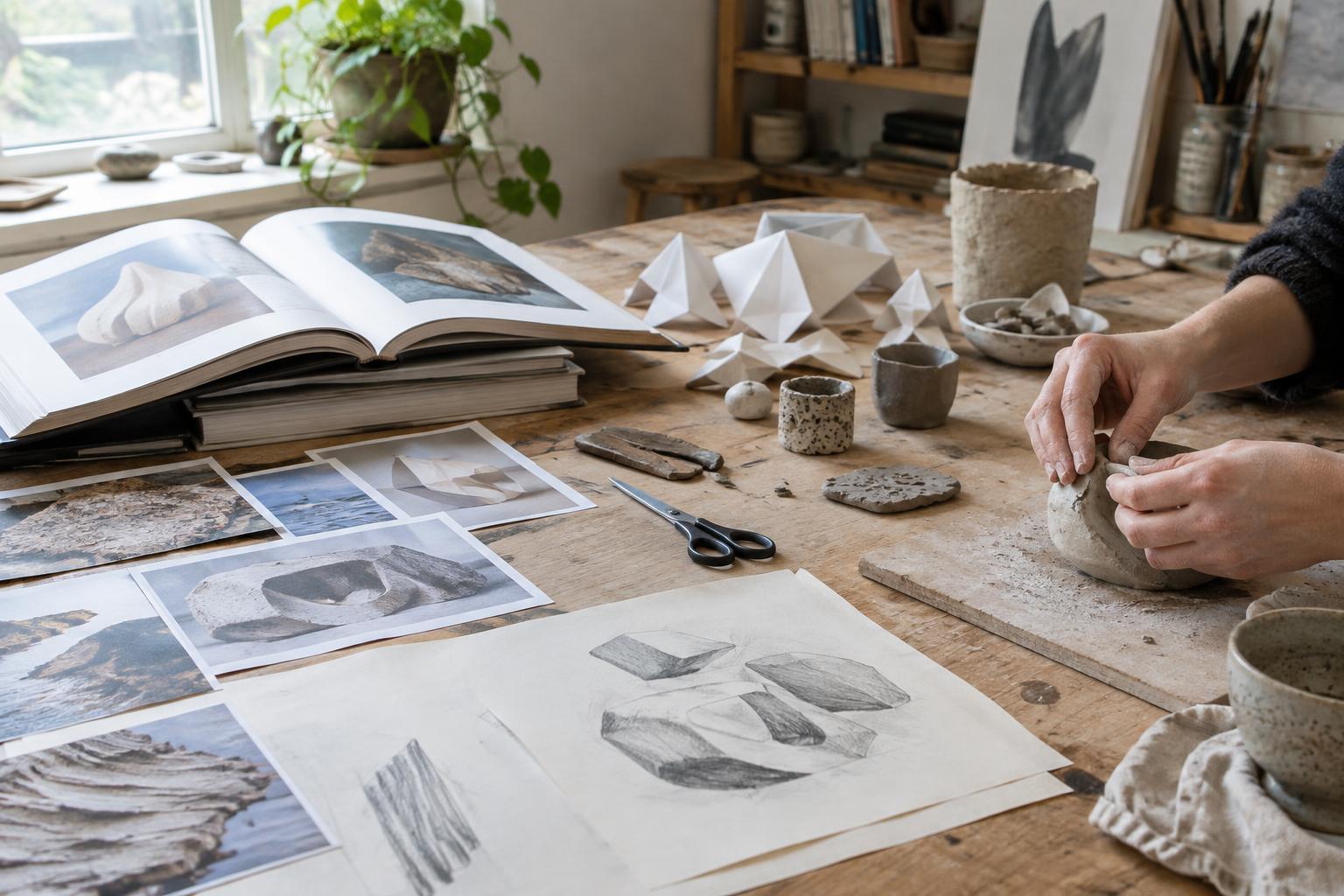
Creative PracticeResearch can deepen an artwork, but it can also postpone the moment when an idea meets a material. A practical approach to gathering references, setting boundaries, testing ideas and returning to the studio with questions worth making through.
Read article · 4 min↗
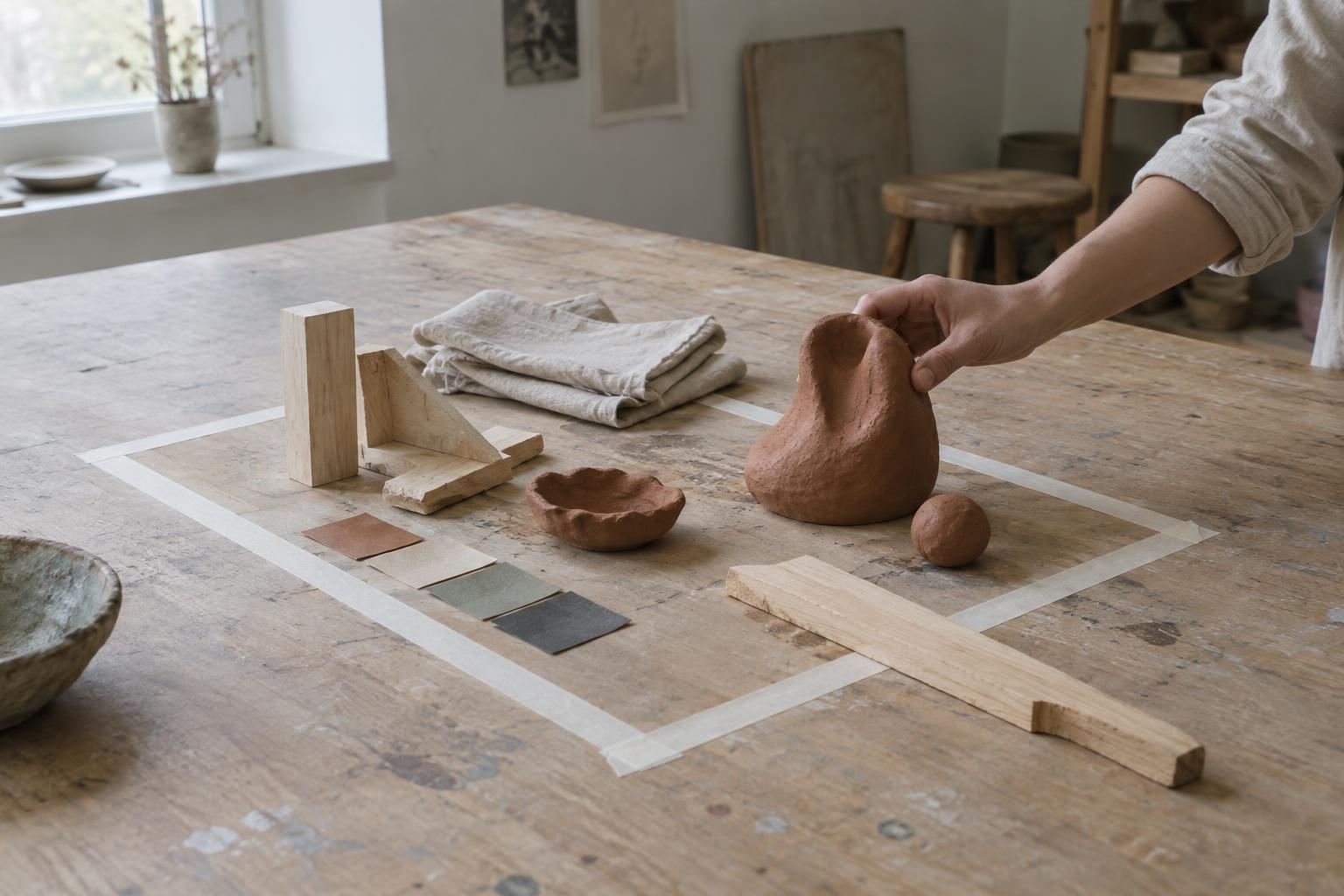
Creative PracticeA limited palette, a short deadline or an awkward room can give an artwork direction. But not every restriction is productive. This guide offers ways to choose, test and revise constraints in contemporary art practice.
Read article · 4 min↗
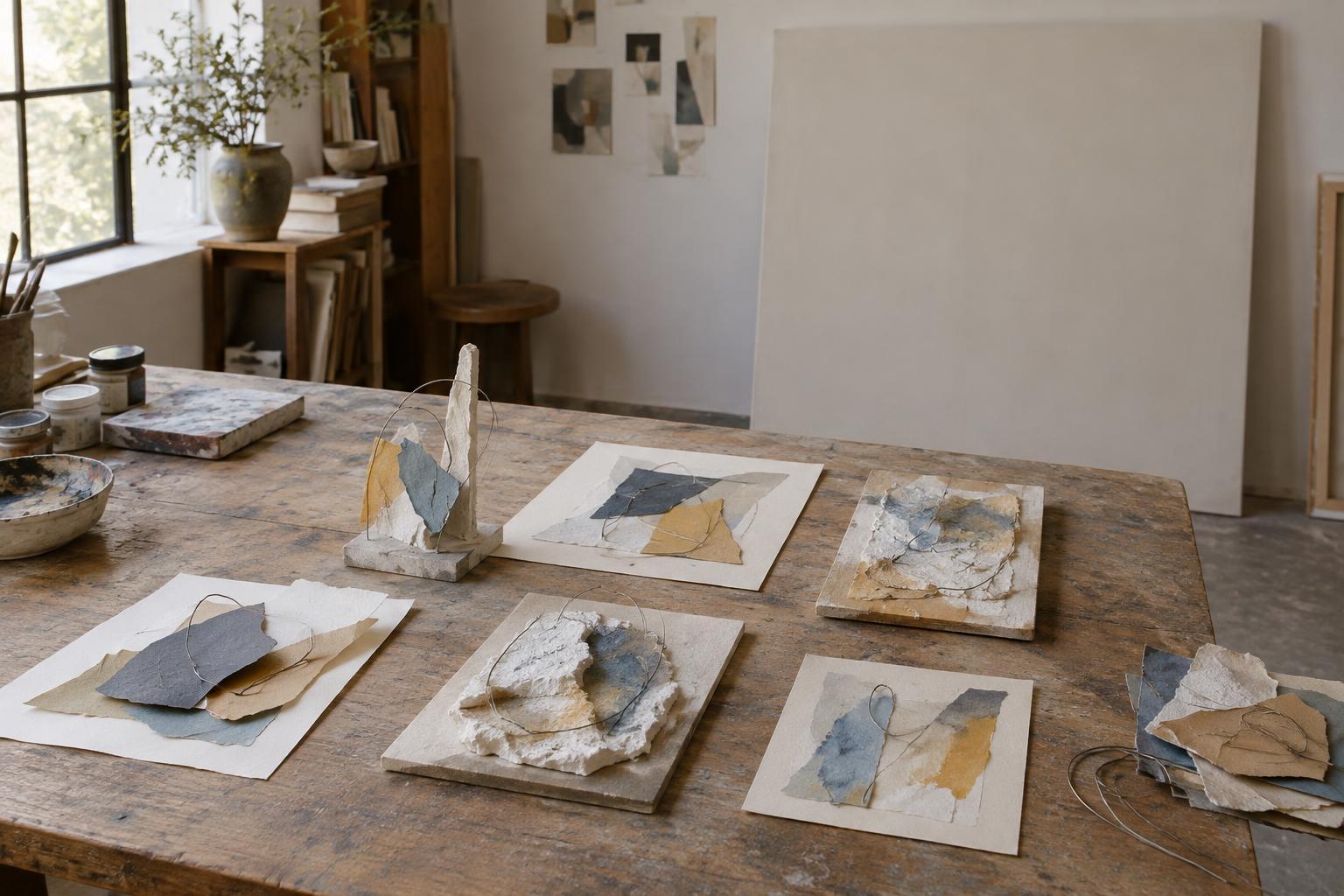
Creative PracticeA small study is more than a miniature version of a finished piece. It can help you test a material, a visual relationship or a viewer’s experience while changes are still easy to make. Here is a practical way to design studies that answer useful questions and guide the next stage of a work.
Read article · 4 min↗
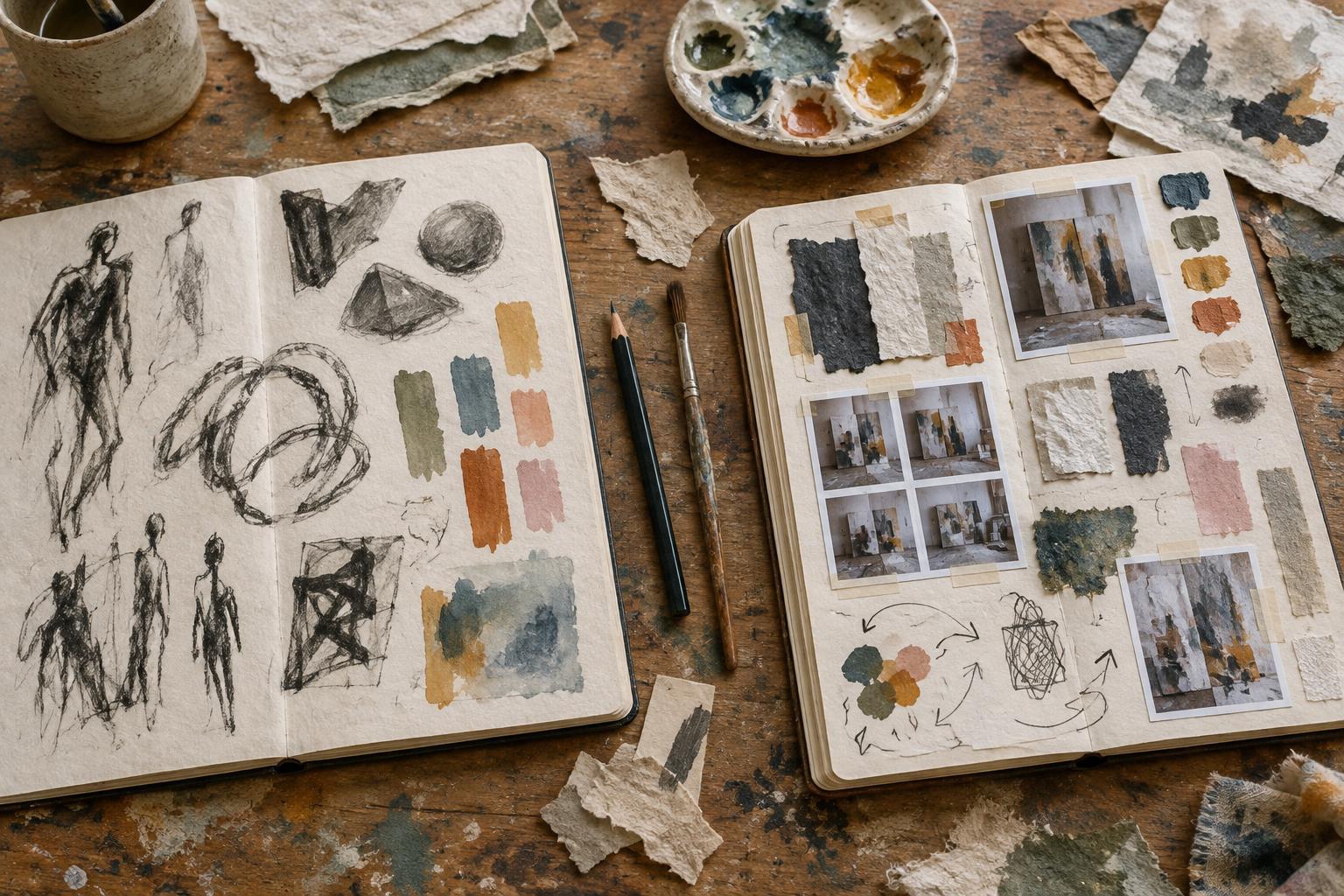
Creative PracticeA sketchbook gives ideas room to appear; a process journal helps an artist understand how those ideas change. Learn what to put in each, how they can work together, and when one notebook is enough.
Read article · 4 min↗
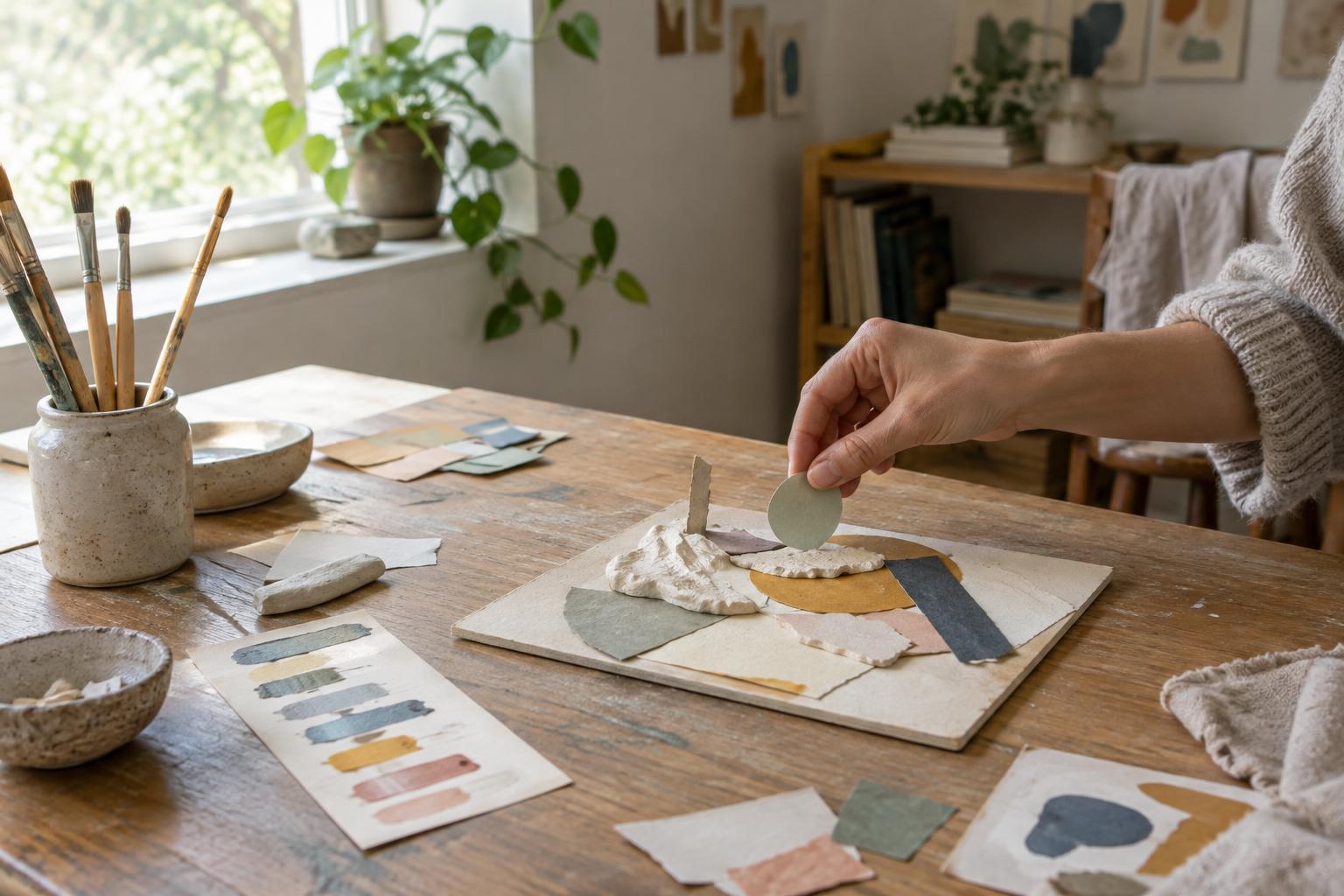
Creative PracticeA studio practice does not need long, uninterrupted days to develop. For artists working in short windows, a useful routine makes it easier to begin, protects time for experimentation and leaves a clear path back to the work.
Read article · 4 min↗
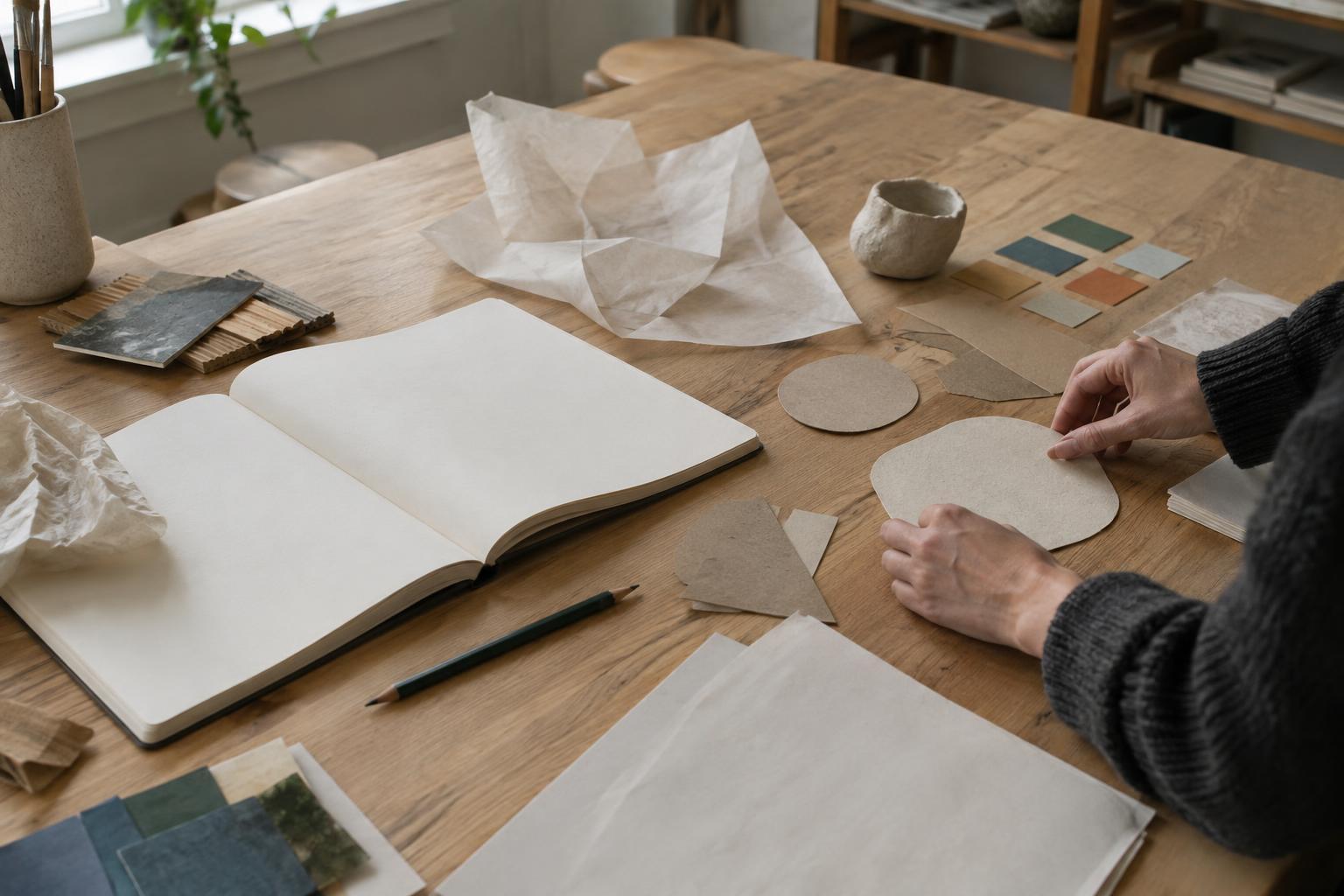
Creative PracticeA self-directed art brief can give an open-ended project enough structure to begin without deciding its outcome. These questions help artists define a starting point, choose useful constraints, plan tests and recognize when the work is ready to share.
Read article · 4 min↗
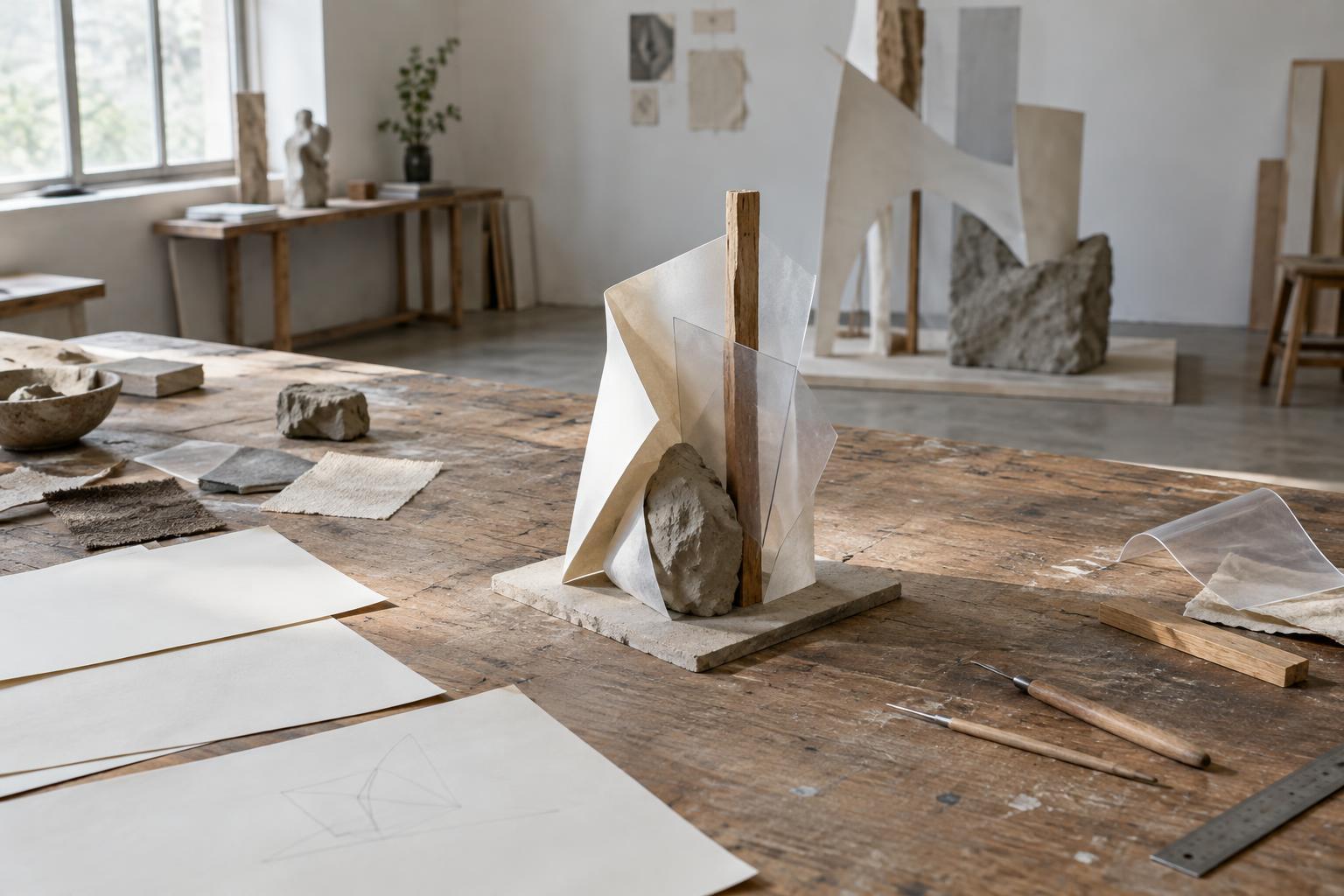
Creative PracticeAn art idea can begin as a question, an image or a material you want to test. Learn how to give that impulse a workable form without deciding every detail in advance.
Read article · 4 min↗
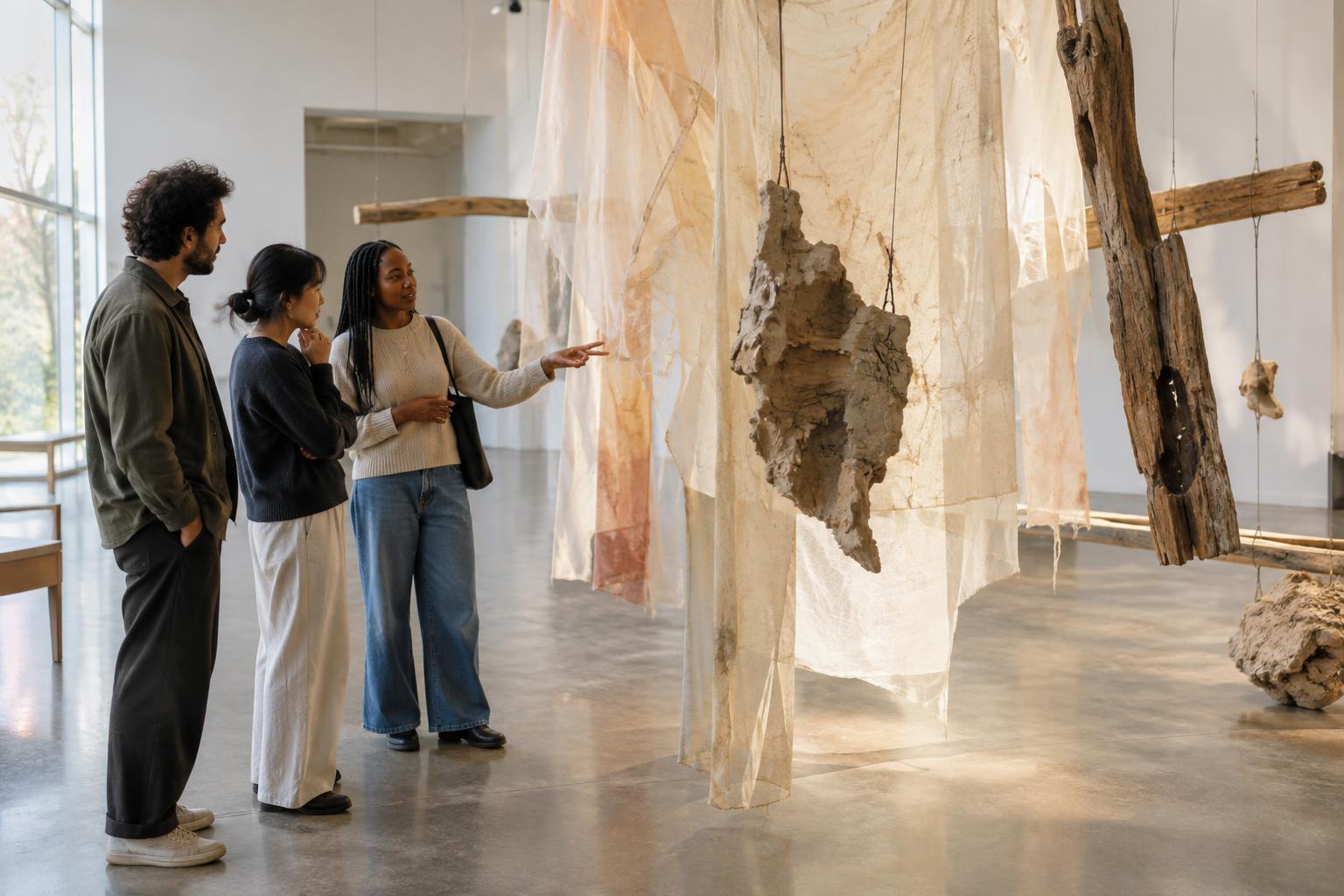
Contemporary ArtContemporary art can invite strong reactions, but a conversation need not begin with expertise or end in agreement. Learn how to move beyond quick judgments, ask more useful questions and make room for different ways of experiencing a work.
Read article · 4 min↗
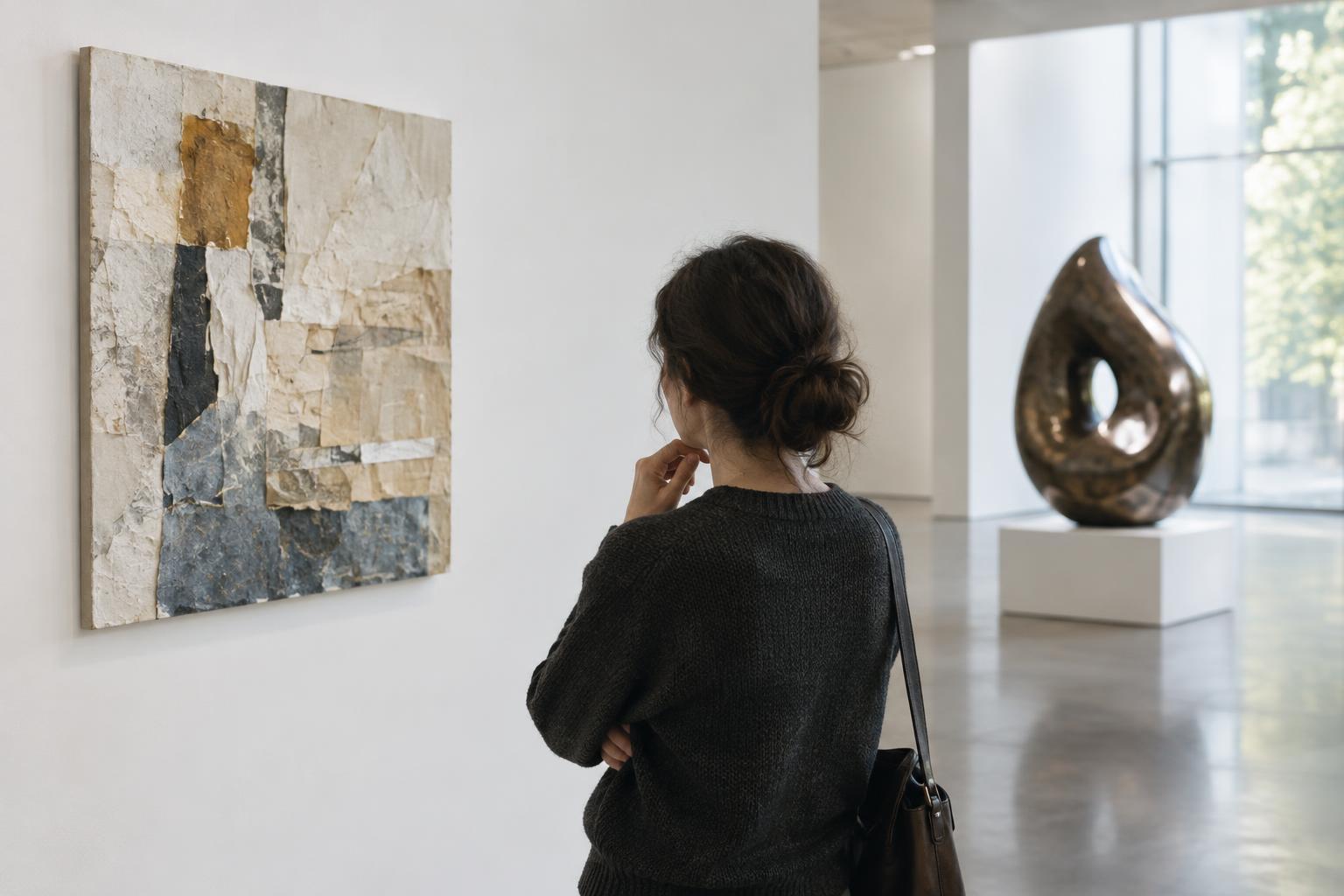
Contemporary ArtA work can be expensive without being meaningful to every viewer, and deeply meaningful without attracting a high price. Understanding what each measure can and cannot tell us makes room for a richer experience of contemporary art.
Read article · 4 min↗
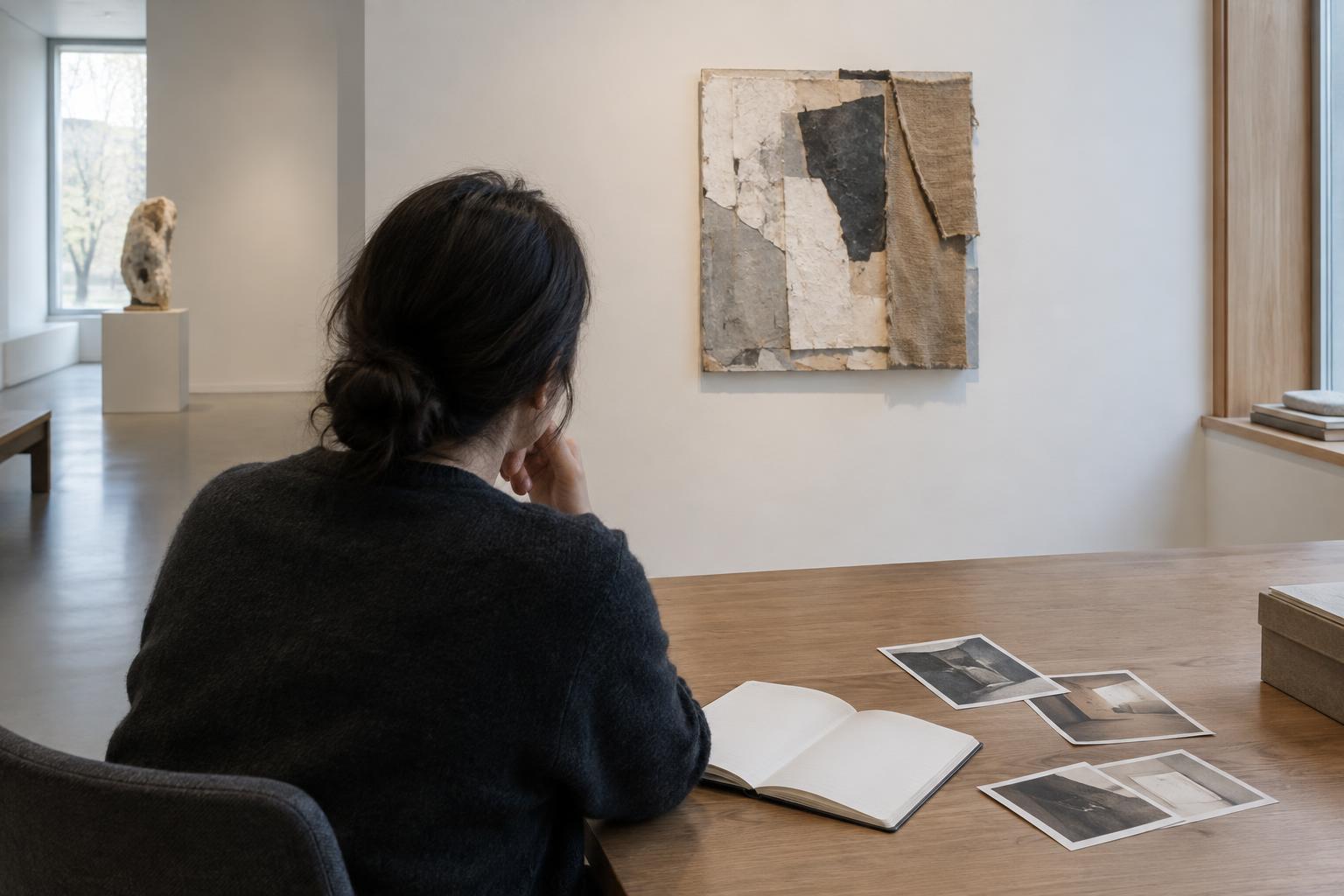
Contemporary ArtAn unfamiliar artist’s work can invite interpretation before you know much about its maker. A careful research process helps you establish basic facts, understand the work’s context and distinguish the artist’s own account from independent commentary.
Read article · 4 min↗
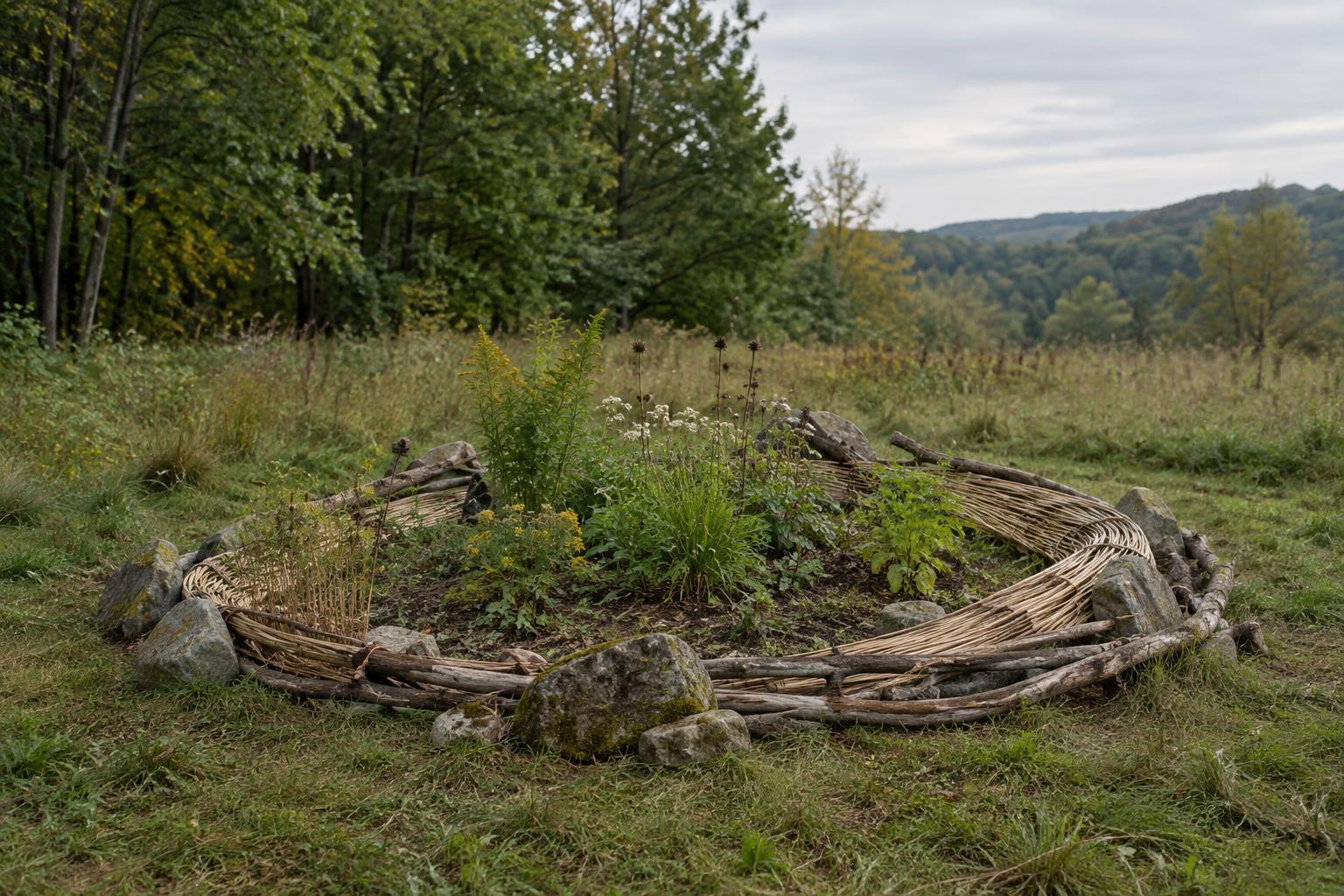
Contemporary ArtEnvironmental questions enter contemporary art through images, materials, places and participation. This guide looks at common approaches to ecological art and offers ways to consider both an artwork’s ideas and its practical choices.
Read article · 3 min↗
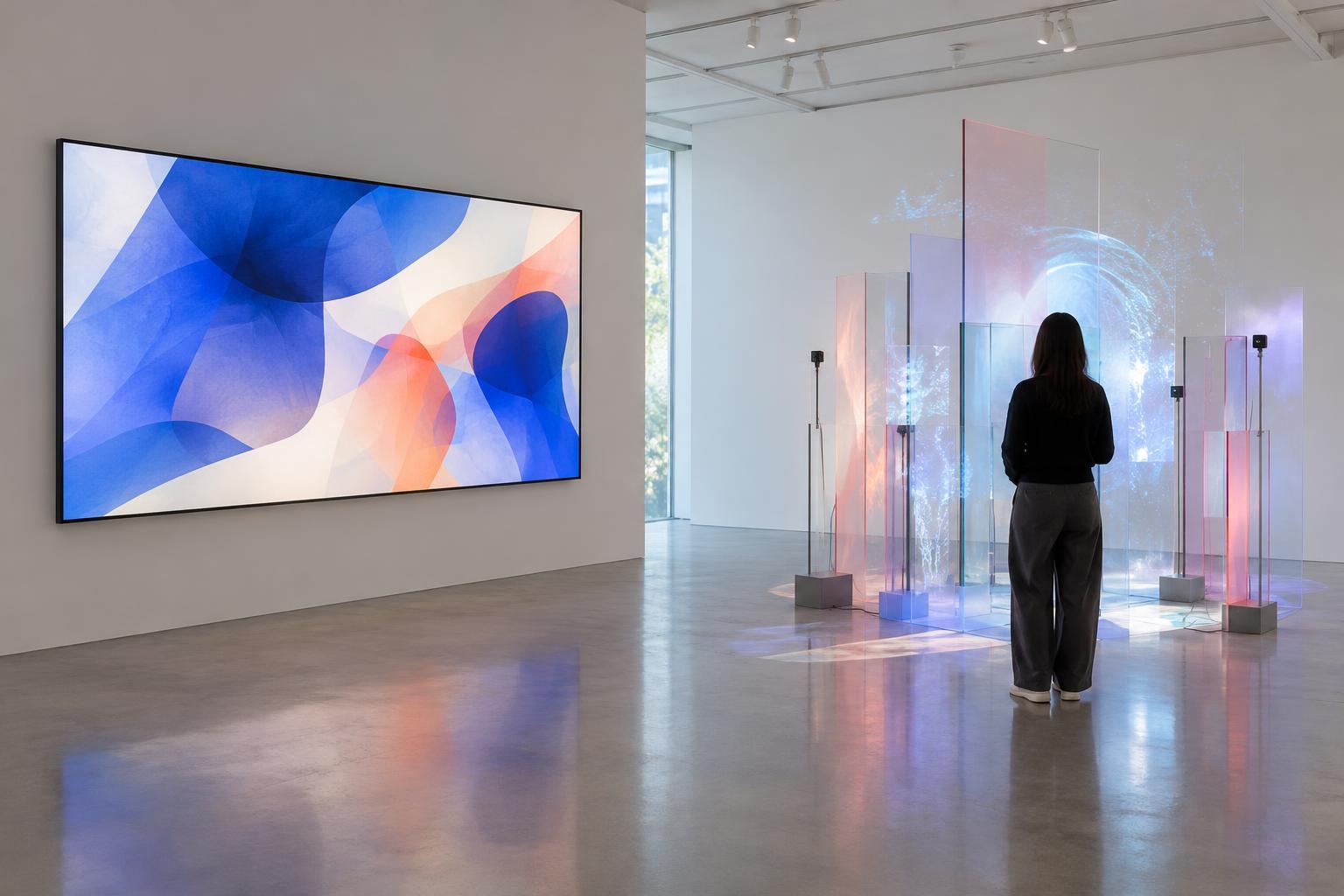
Contemporary ArtDigital art and new media art overlap, but the labels draw attention to different things. One often describes how a work is made, while the other can describe a broader relationship with technology, communication and participation. Learn how to use both terms without forcing every artwork into a rigid category.
Read article · 4 min↗
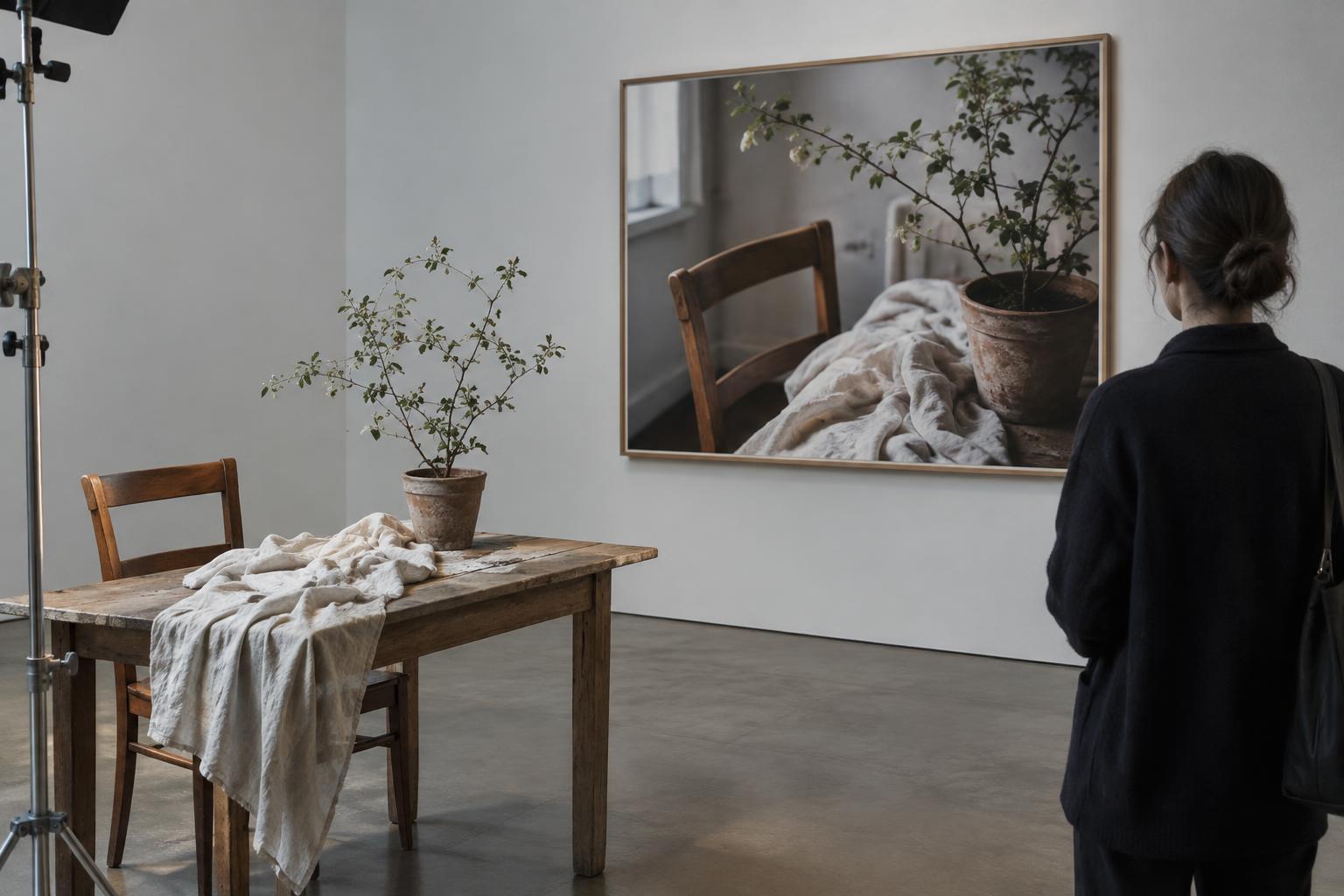
Contemporary ArtA photograph can record a moment, stage a scene, or do both at once. This guide explores how contemporary artists use framing, context, and display to shape what an image appears to tell us.
Read article · 4 min↗
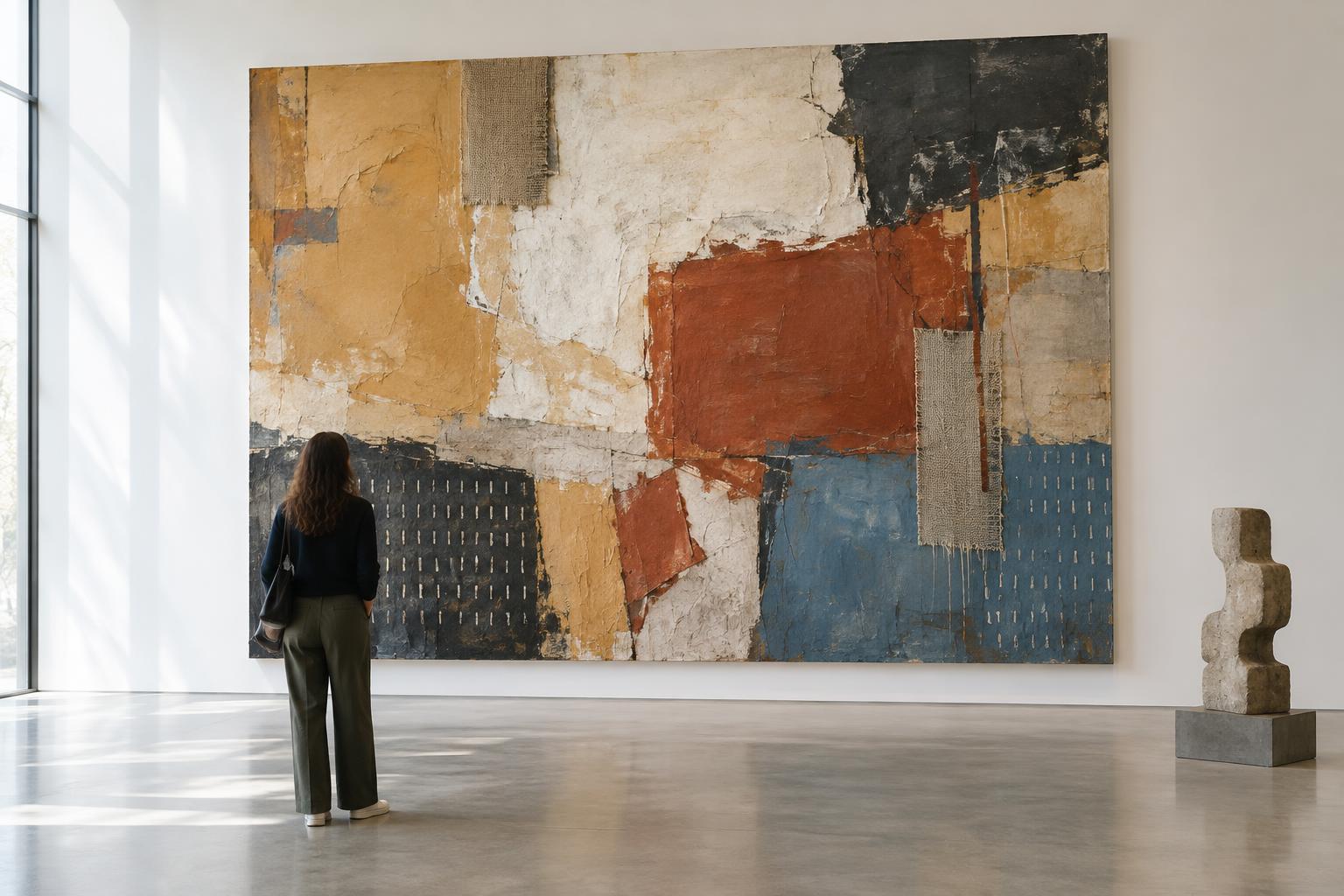
Contemporary ArtAbstract art does not require you to identify a subject before you can respond to it. This guide offers practical ways to look at color, scale, material, repetition, space and your own shifting attention.
Read article · 4 min↗
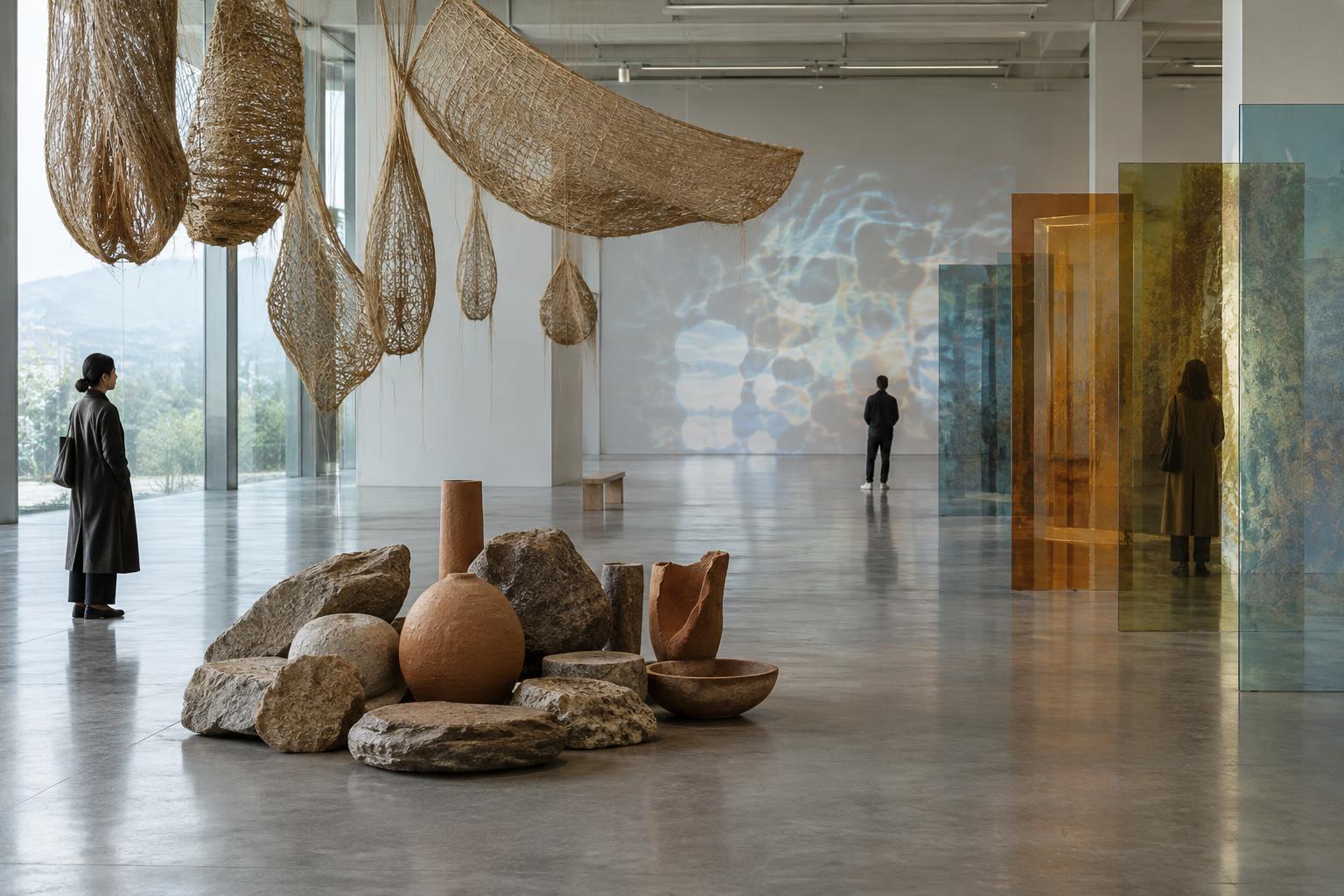
Contemporary ArtA familiar art-history timeline can help explain how movements followed and challenged one another. But contemporary art does not develop in one place or at one pace. Looking across local histories, materials and exhibition contexts offers a fuller way to encounter work from around the world.
Read article · 4 min↗
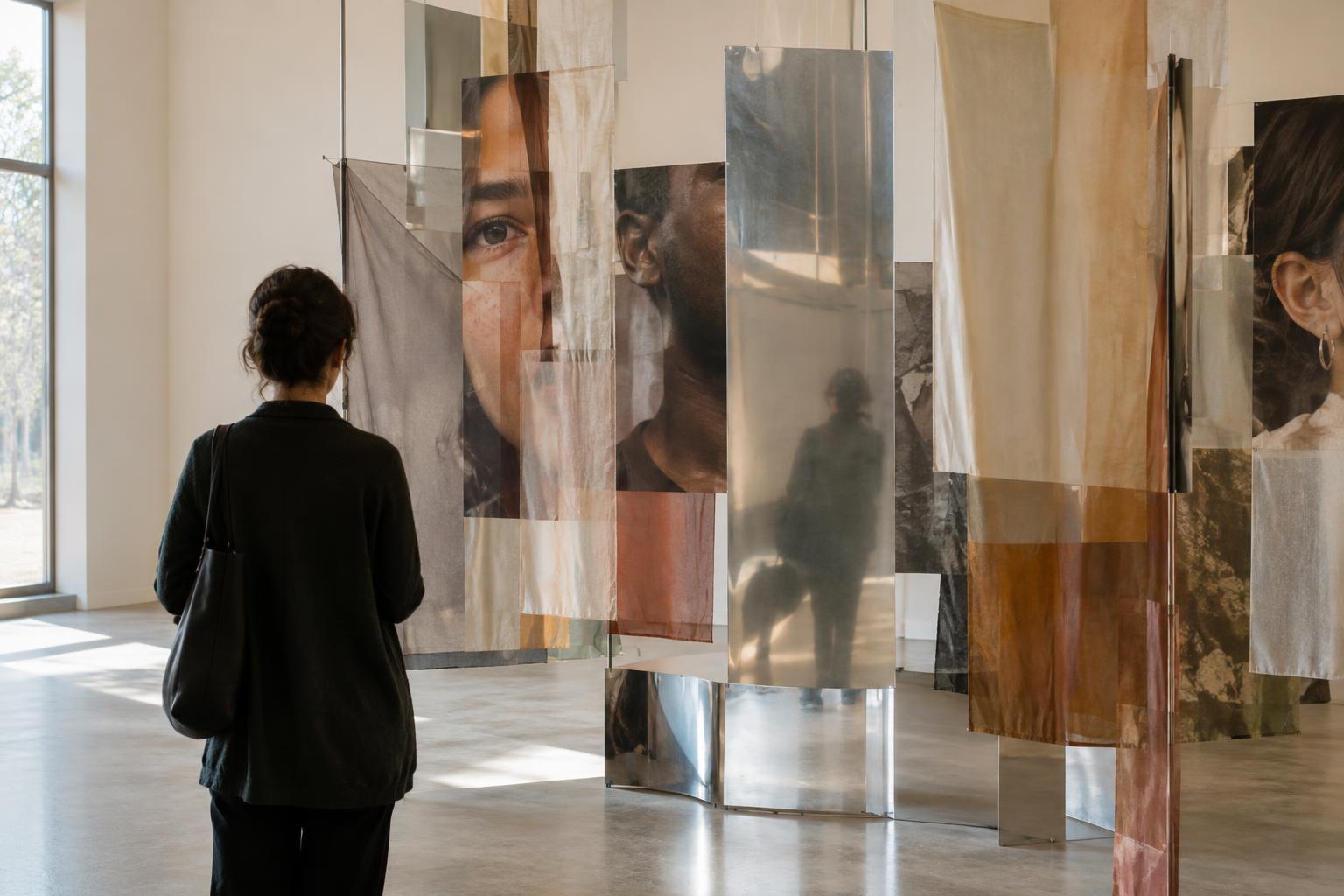
Contemporary ArtIdentity in contemporary art is more than a subject to recognize in a portrait. This guide offers practical ways to look at how artists use images, materials, space and context to explore who is seen, who speaks and how meaning changes with the viewer.
Read article · 4 min↗
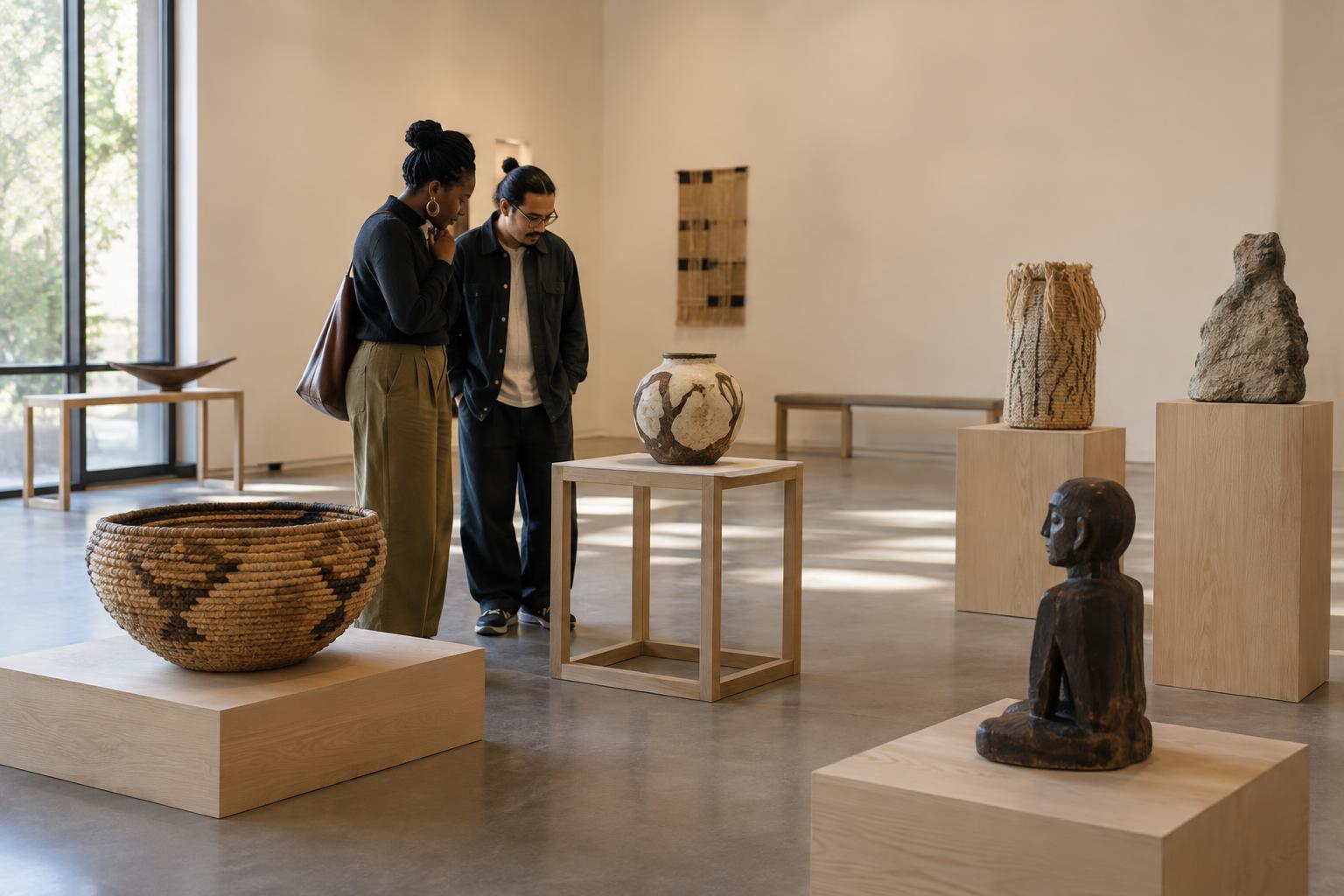
Contemporary ArtDecolonial approaches to contemporary art ask who gets to tell a history, how objects arrived in collections, and whose knowledge shapes an exhibition. These questions can change not only what is shown, but how art is described, cared for, and encountered.
Read article · 4 min↗
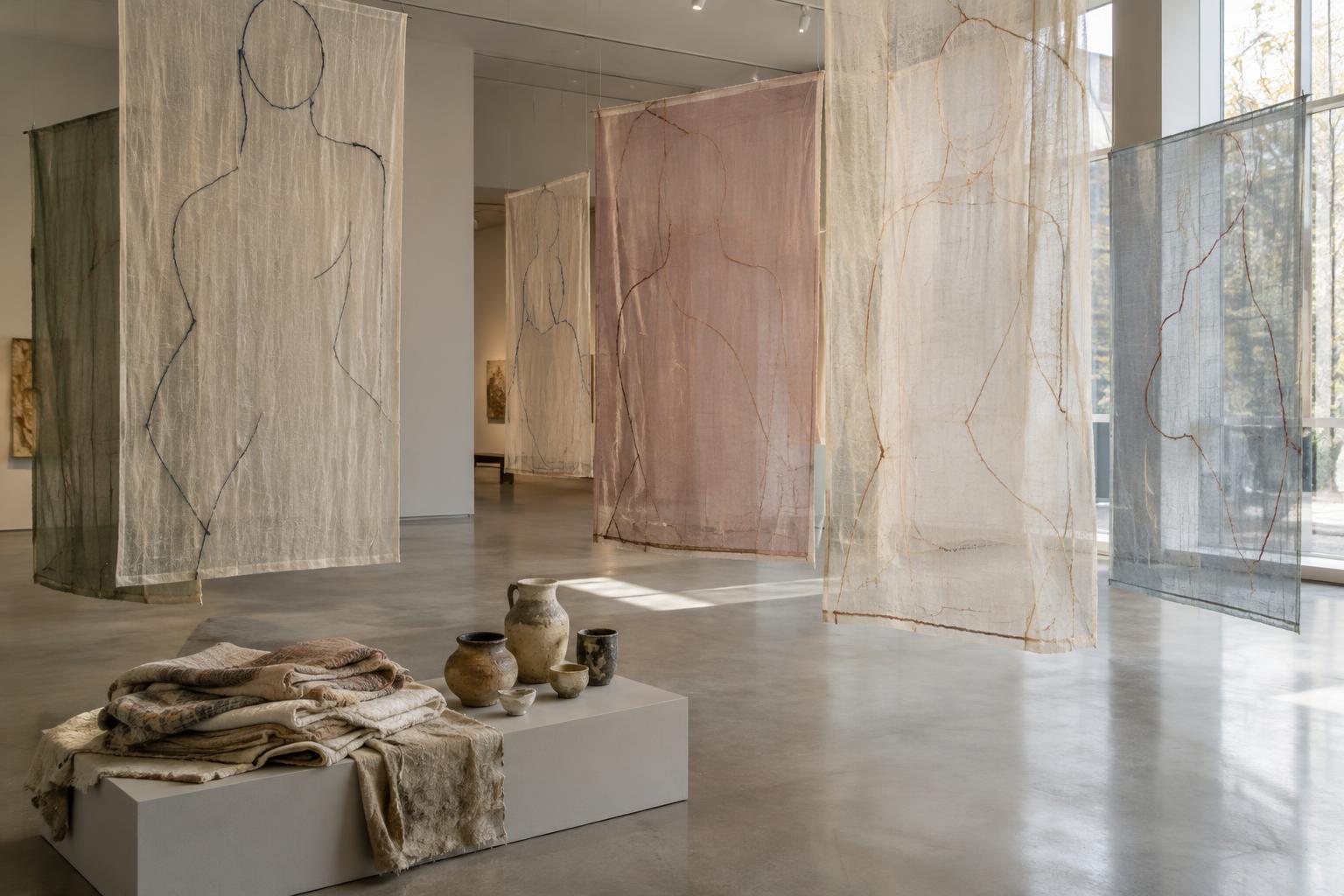
Contemporary ArtFeminist art is not a single style or subject. This guide explores recurring questions about representation, bodies, labor, institutions and collective practice, with practical ways to look closely at contemporary work.
Read article · 4 min↗
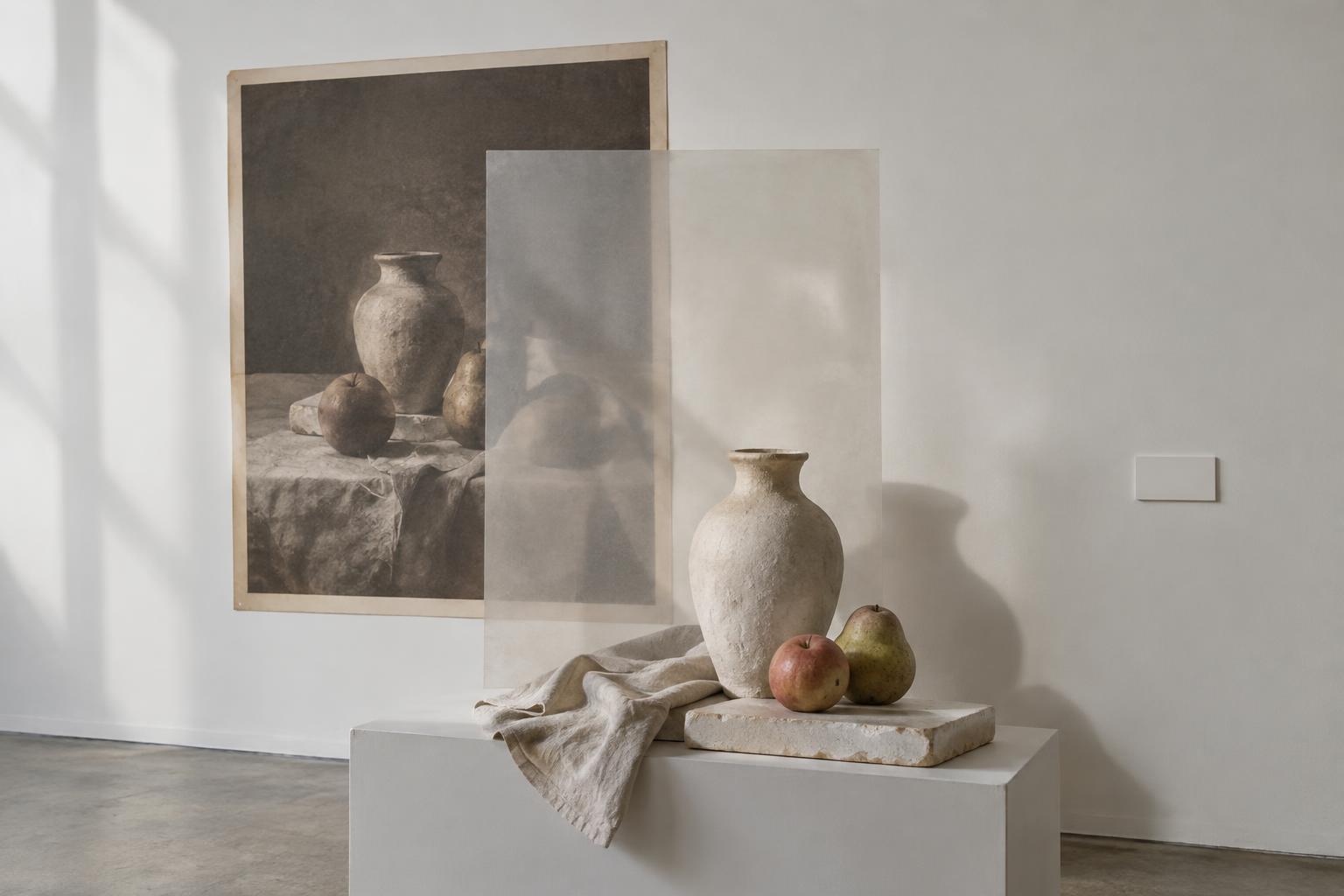
Contemporary ArtAppropriation can turn a familiar image or object into a question about authorship, memory or power. Understanding it means looking beyond what was borrowed to how the work changes its source, who receives credit and what a new setting makes visible.
Read article · 4 min↗
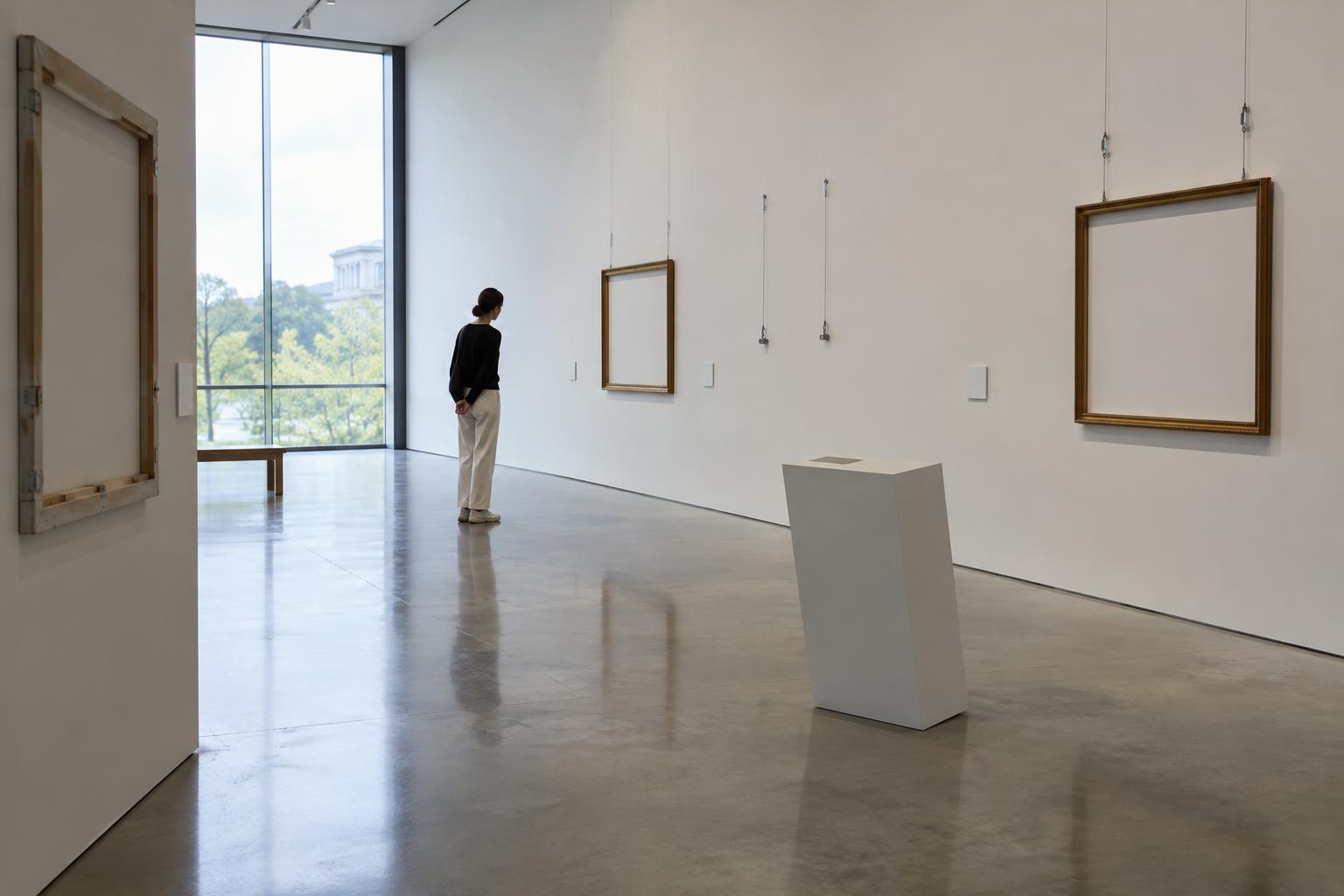
Contemporary ArtInstitutional critique turns attention from the artwork alone to the systems that display, describe and value it. Learn how artists use labels, layouts, collections and participation to make those systems visible—and how to look closely without assuming every critical work rejects the museum.
Read article · 4 min↗
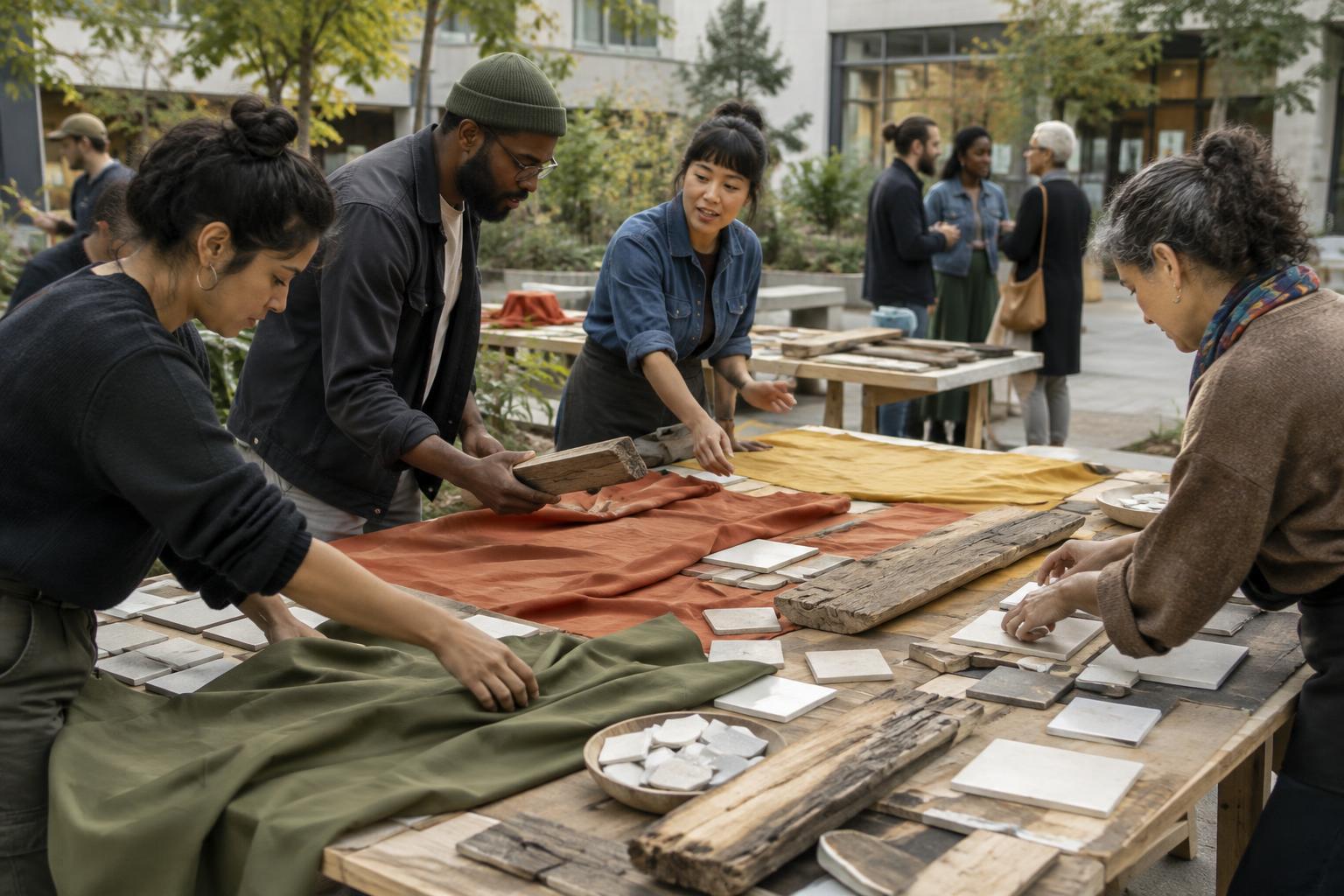
Contemporary ArtSocial practice art and activism can both bring people together around public issues, but they are not interchangeable. A closer look at their goals, methods, and responsibilities offers a more useful way to understand work that crosses the boundary between art and civic action.
Read article · 4 min↗
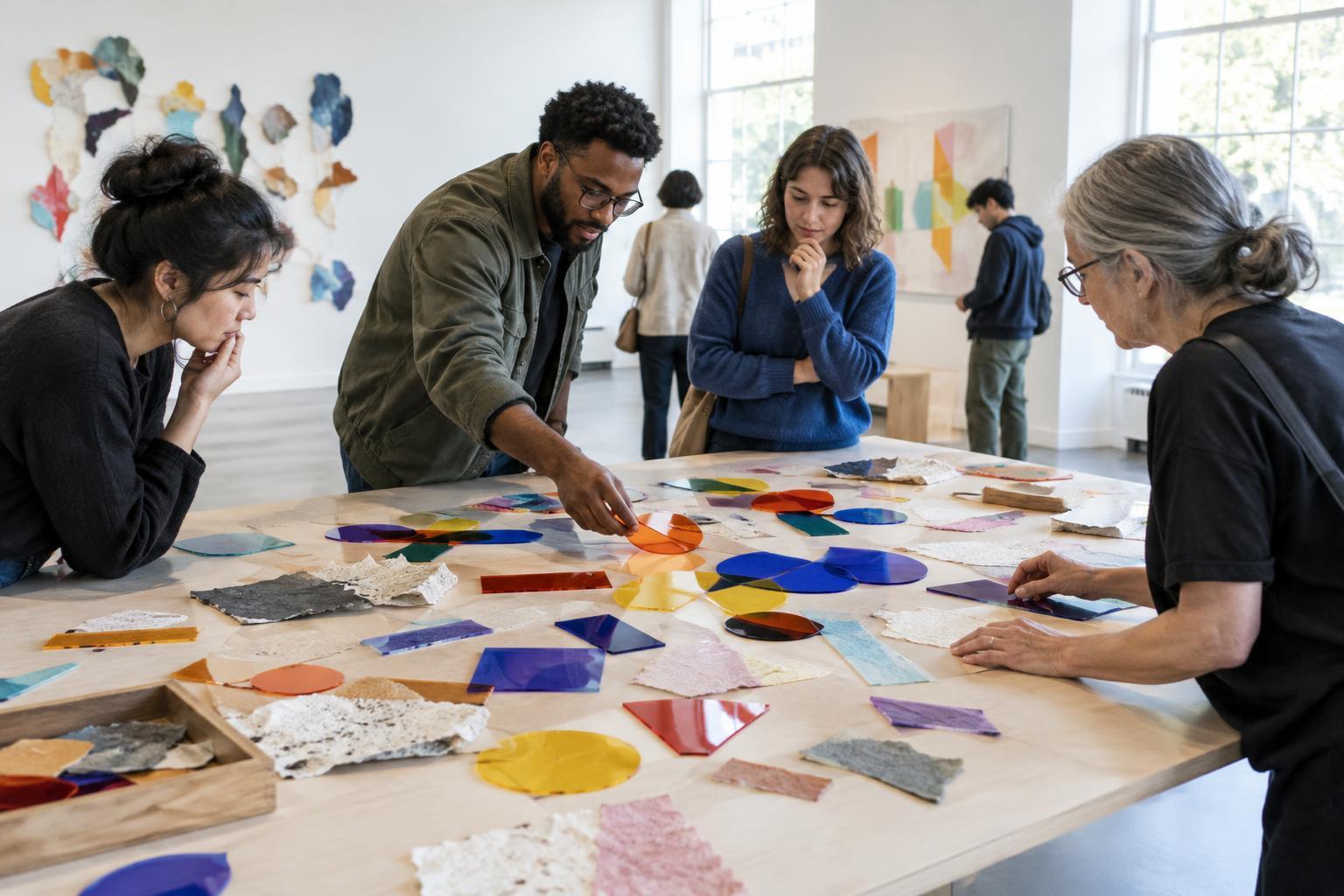
Contemporary ArtWhen visitors help shape an artwork, their choices can change its form, meaning and social dynamics. A practical guide to looking at participation, from the invitation to take part to the traces left behind.
Read article · 4 min↗
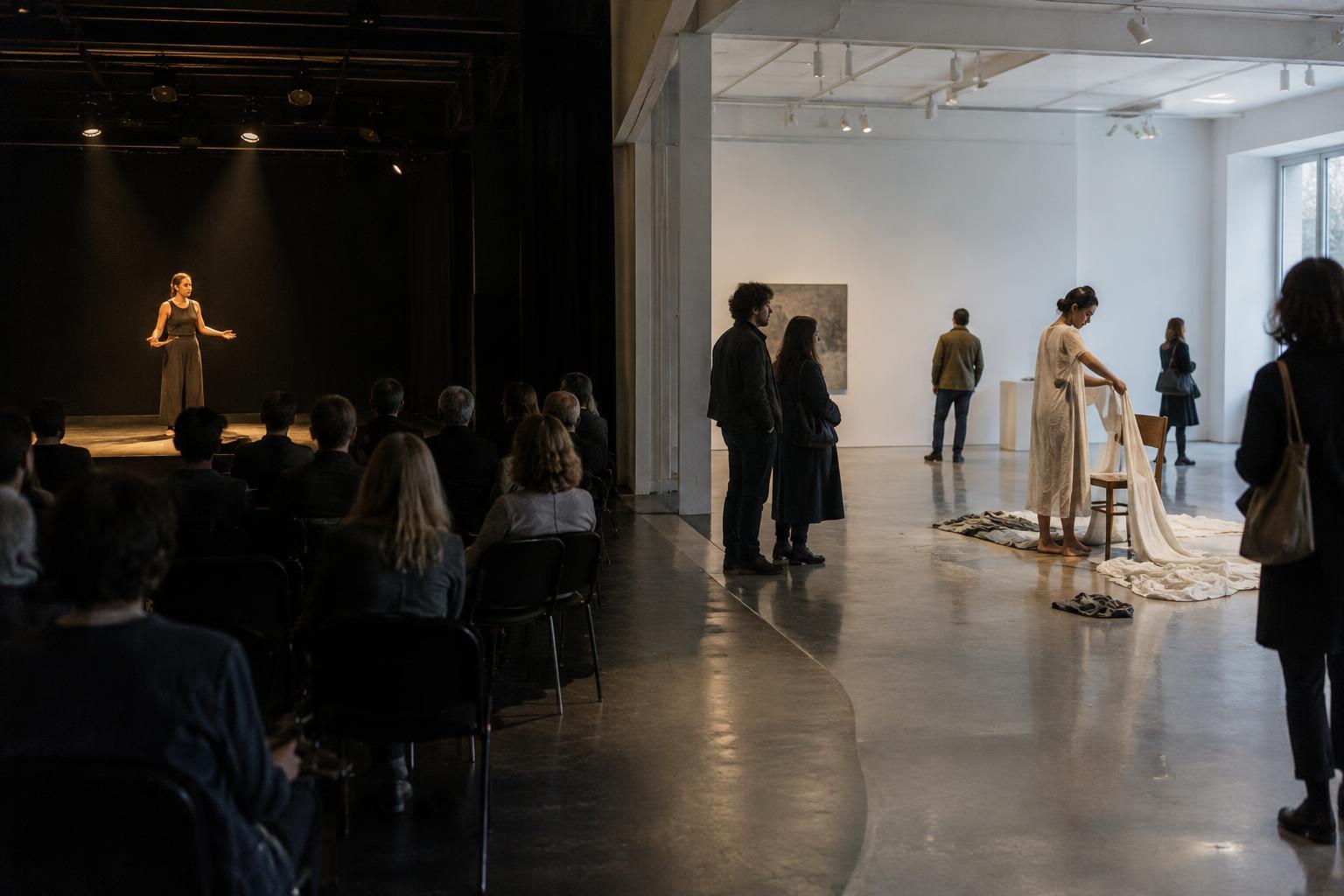
Contemporary ArtPerformance art and theater both bring people together around live action, but they often ask audiences to pay attention in different ways. A guide to their approaches to character, space, time and participation, with room for the many works that cross the boundary.
Read article · 4 min↗
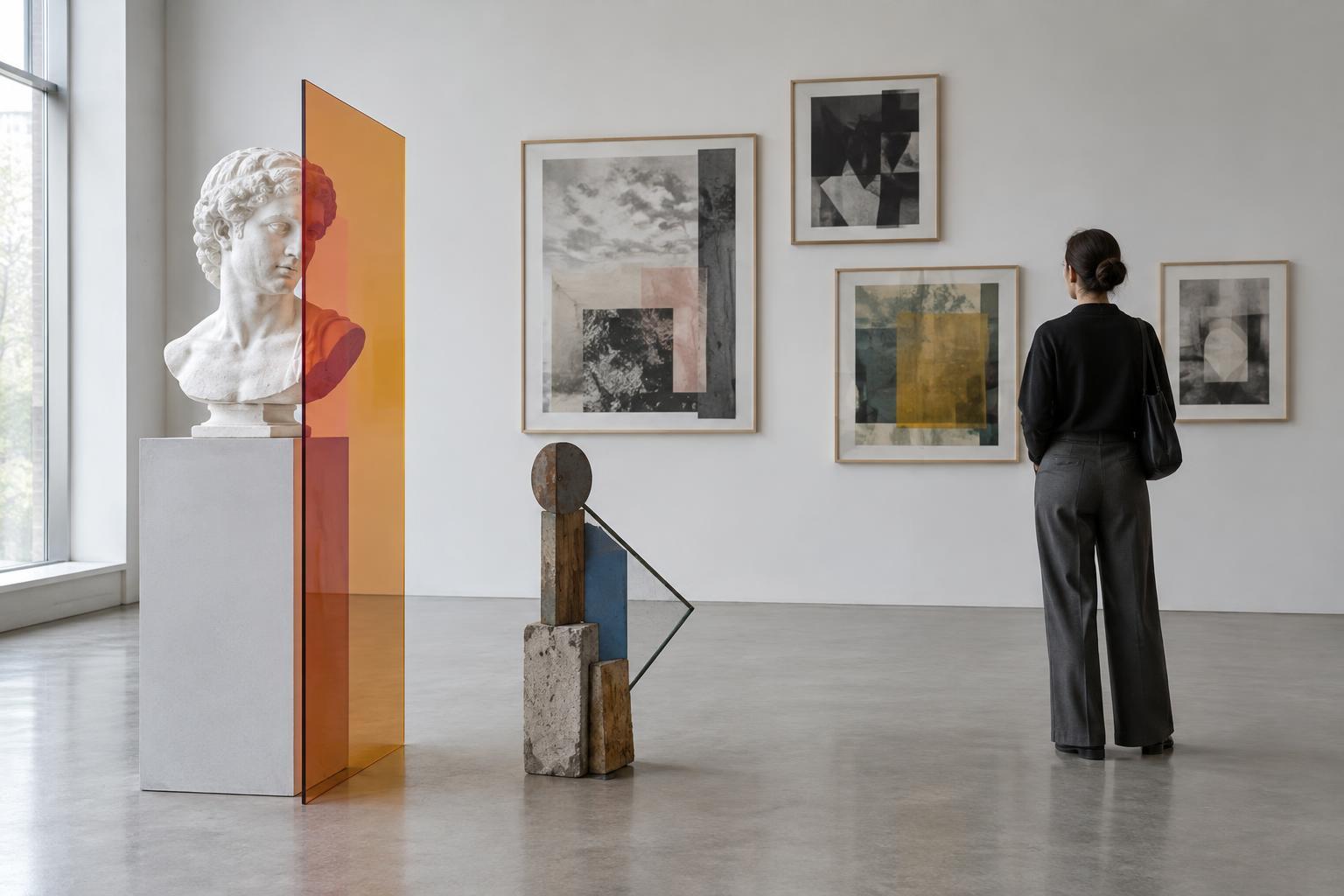
Contemporary ArtPostmodernism can sound like a theory you need to master before entering a gallery. In practice, it offers a few useful ways to look: notice borrowed images, mixed styles, competing meanings and the role of context. This guide explains those ideas in everyday language and shows how to use them when viewing contemporary art.
Read article · 4 min↗
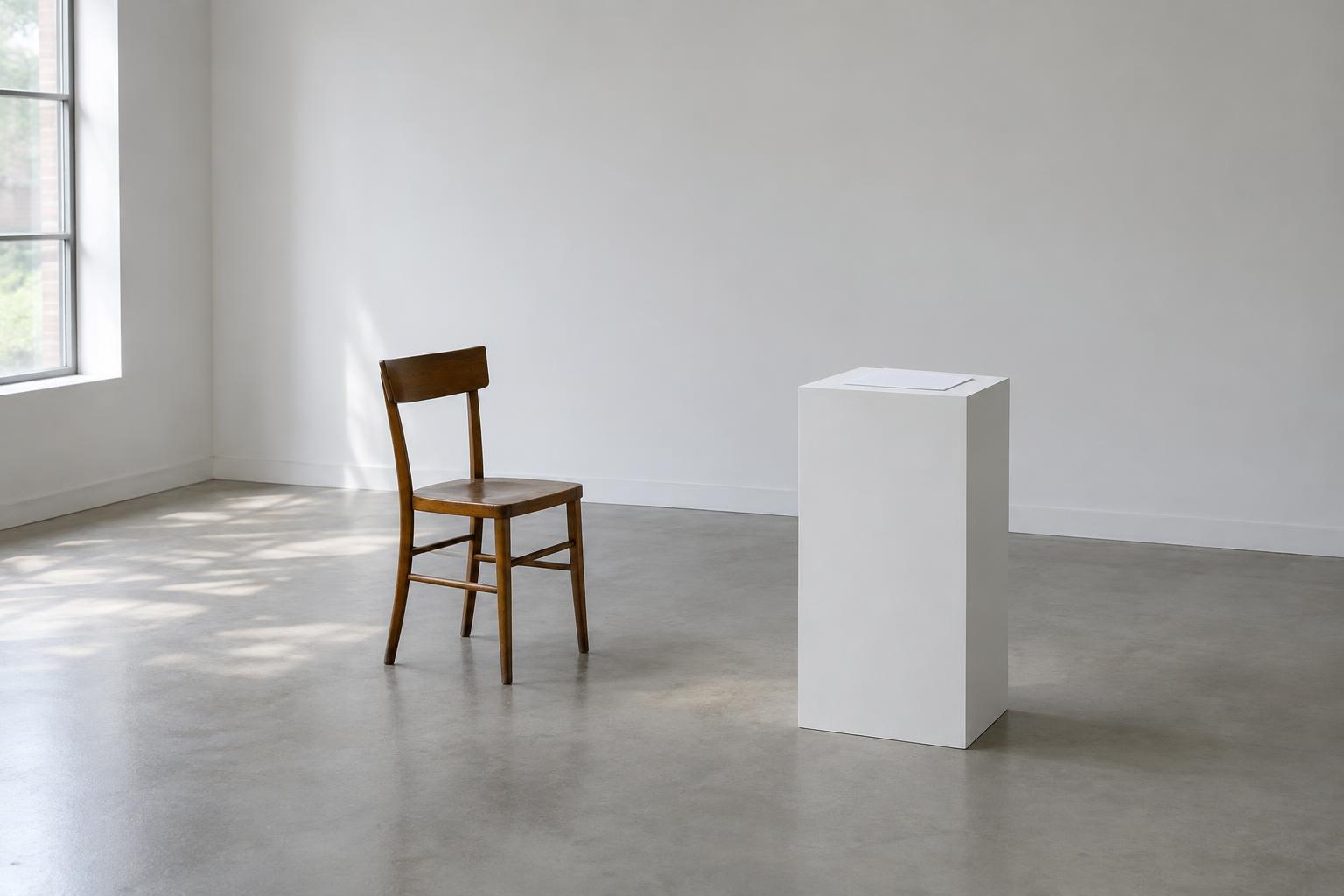
Contemporary ArtConceptual art can take the form of an object, a set of instructions, a photograph or an action. What connects these works is the central role of an idea. Learn how to approach conceptual art by looking at its choices, context and effects.
Read article · 4 min↗
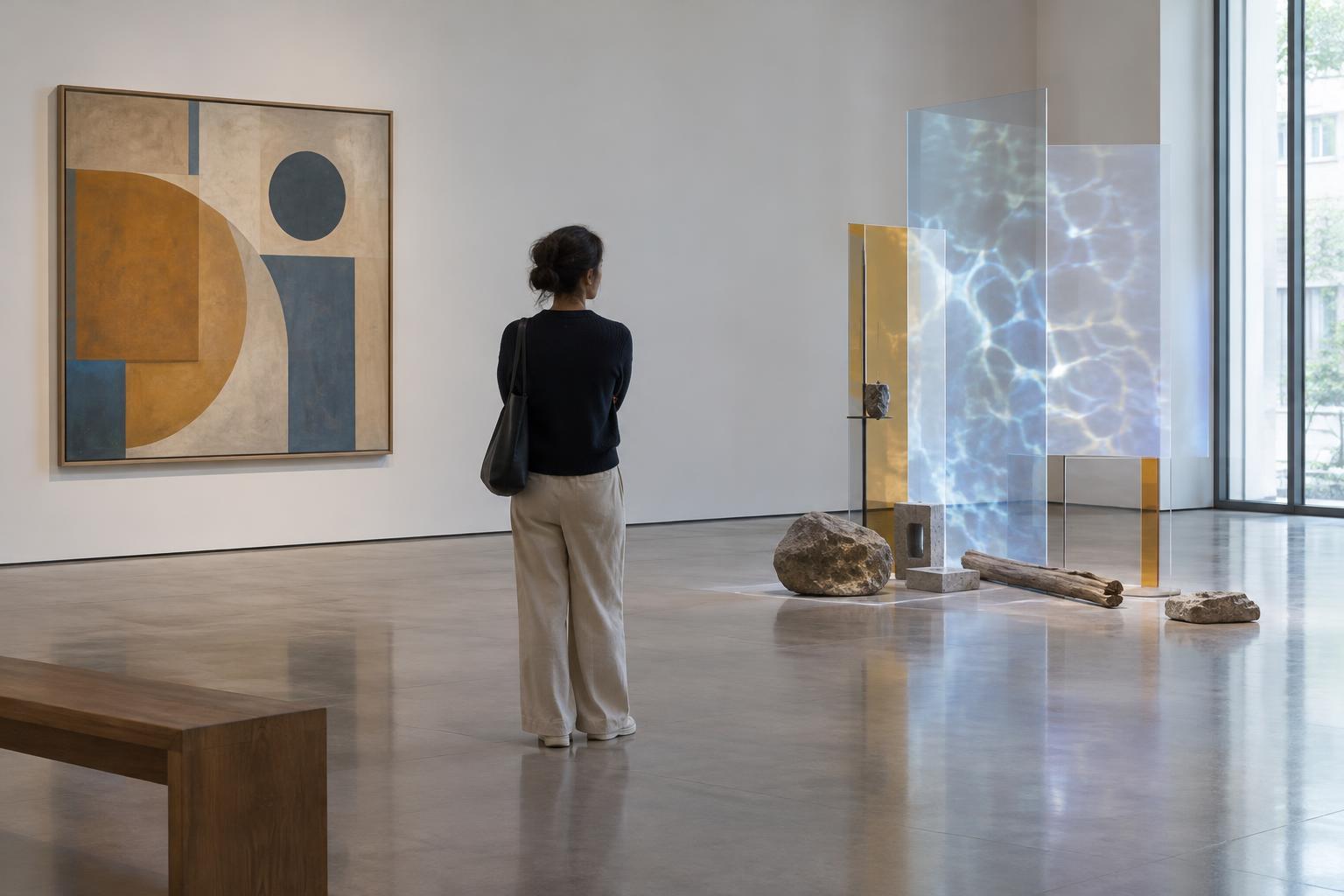
Contemporary Art“Modern” and “contemporary” can both sound like ways to say “new,” but in art they point to different histories and habits of looking. Here is a practical guide to the distinction, its blurry boundary, and why the labels still matter in a gallery.
Read article · 4 min↗
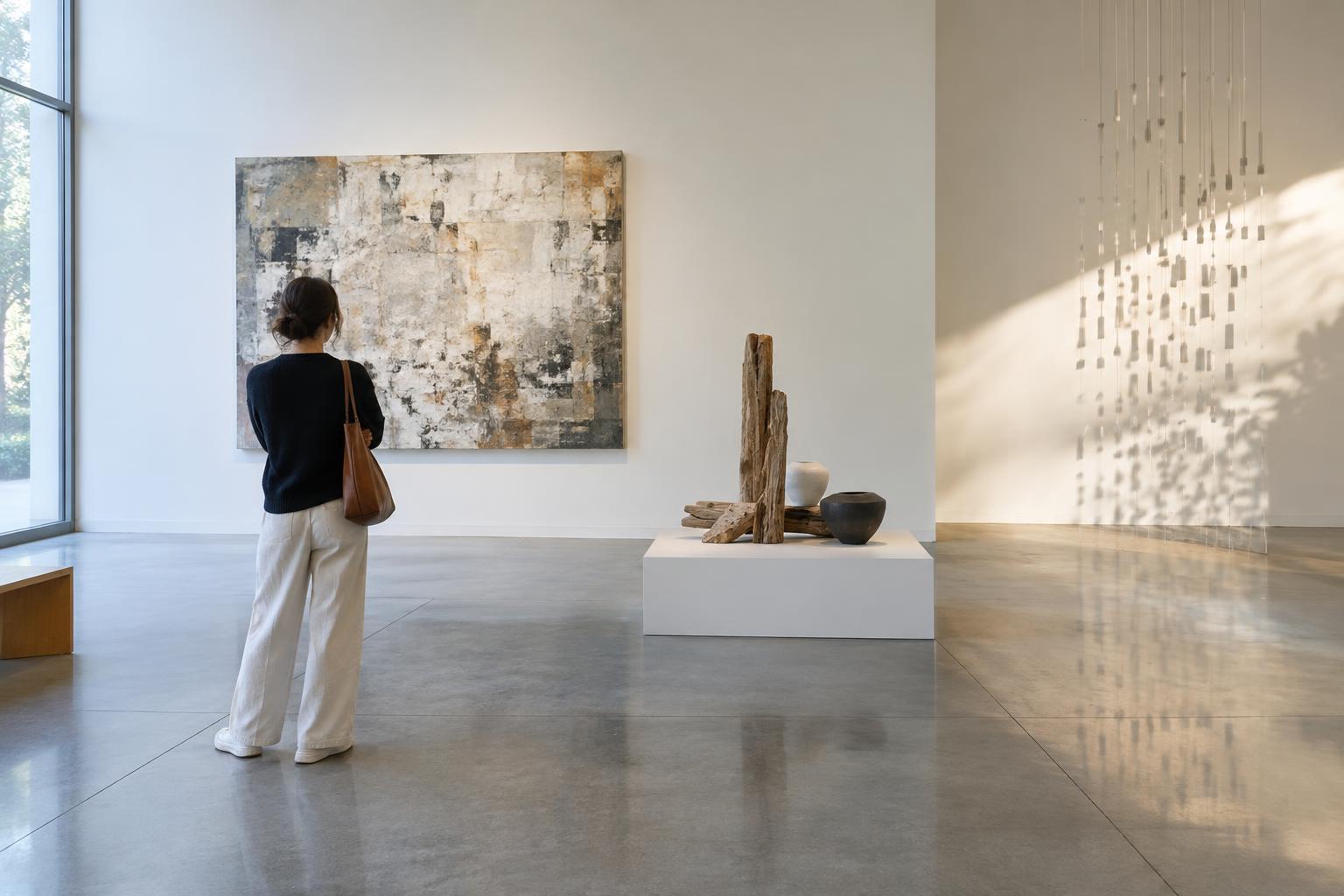
Contemporary ArtContemporary art is more than art made recently. This guide explains how the term relates to time, ideas, materials and context, with simple questions to help you approach unfamiliar work.
Read article · 4 min↗
 Exhibition Interpretation